Character model: Difference between revisions
→Oddities: No seriously those alt-models are horrendous and way off in totally different ways. |
|||
| Line 34: | Line 34: | ||
* Most, if not all, of the new Autobot cars, Decepticon planes, and Triple Changers from the 1985 product line bear hallmarks of this. [[Grapple (G1)|Grapple]] and [[Inferno (G1)|Inferno]] are missing the crane arm and ladder, respectively, that ought to hang down their backs; in Grapple's case, a misinterpretation caused details representing his crane arm to become part of his legs. [[Red Alert (G1)|Red Alert]] and [[Smokescreen (G1)|Smokescreen]] feature their vehicle mode trunks on the backs of their torsos, when those parts are supposed to become their legs. [[Astrotrain (G1)|Astrotrain]] has a tail fin on his back, when it is supposed to sit on his chest. Instead of his tank turret, [[Blitzwing (G1)|Blitzwing]] has a "rocket pack" to which the wings that are supposed to be on his shoulders are attached, while his tank barrel is moved to extrude from the back of his head. And the other new Autobot cars and Decepticons jets feature rear view designs that, while not noticeably bizarre, are generally simplified and lack even basic details from the toys. | * Most, if not all, of the new Autobot cars, Decepticon planes, and Triple Changers from the 1985 product line bear hallmarks of this. [[Grapple (G1)|Grapple]] and [[Inferno (G1)|Inferno]] are missing the crane arm and ladder, respectively, that ought to hang down their backs; in Grapple's case, a misinterpretation caused details representing his crane arm to become part of his legs. [[Red Alert (G1)|Red Alert]] and [[Smokescreen (G1)|Smokescreen]] feature their vehicle mode trunks on the backs of their torsos, when those parts are supposed to become their legs. [[Astrotrain (G1)|Astrotrain]] has a tail fin on his back, when it is supposed to sit on his chest. Instead of his tank turret, [[Blitzwing (G1)|Blitzwing]] has a "rocket pack" to which the wings that are supposed to be on his shoulders are attached, while his tank barrel is moved to extrude from the back of his head. And the other new Autobot cars and Decepticons jets feature rear view designs that, while not noticeably bizarre, are generally simplified and lack even basic details from the toys. | ||
* The phenomenon continued into 1986 product line. The simple designs of the [[Aerialbot (G1)|Aerialbots]] allowed them to make it through mostly unscathed, save for [[Silverbolt (G1)|Silverbolt]], whose rear-view model omits the large jet nosecone that rests on his back and reverses the orientation of the tailfin there. The [[Protectobot (G1)|Protectobots]] have much more visible examples of the quirk, with rear views that omit virtually all kibble, like [[Groove (G1)|Groove]]'s front wheel or [[Hot Spot (G1)|Hot Spot]]'s ladder. On the Decepticon side, both the [[Stunticon (G1)|Stunticon]]s and [[Combaticon (G1)|Combaticon]]s different hugely from their toys in both front ''and'' rear views; missing kibble is hardly worth pointing out when their designs are so completely altered that said kibble might not even exist, but [[Bruticus (G1)|Bruticus]] even has a different backpack than [[Onslaught (G1)|Onslaught]] despite the fact that they are ''literally the exact same part''. | * The phenomenon continued into 1986 product line. The simple designs of the [[Aerialbot (G1)|Aerialbots]] allowed them to make it through mostly unscathed, save for [[Silverbolt (G1)|Silverbolt]], whose rear-view model omits the large jet nosecone that rests on his back and reverses the orientation of the tailfin there. The [[Protectobot (G1)|Protectobots]] have much more visible examples of the quirk, with rear views that omit virtually all kibble, like [[Groove (G1)|Groove]]'s front wheel or [[Hot Spot (G1)|Hot Spot]]'s ladder. On the Decepticon side, both the [[Stunticon (G1)|Stunticon]]s and [[Combaticon (G1)|Combaticon]]s different hugely from their toys in both front ''and'' rear views; missing kibble is hardly worth pointing out when their designs are so completely altered that said kibble might not even exist, but [[Bruticus (G1)|Bruticus]] even has a different backpack than [[Onslaught (G1)|Onslaught]] despite the fact that they are ''literally the exact same part''. Radically-different character models that really aren't any more accurate in robot mode —yet vastly ''more'' accurate in vehicle mode— are known to exist for the Combaticons and [[Breakdown (G1)|Breakdown]] (at least), and were published ''[[Transformers Generations]]'' and ''[[Transformers: The Ark| The Ark]]''. | ||
* From the 1987 line, the [[Technobot (G1)|Technobots]] fell victim to the same foible, with all the team's members featuring made-up rear-view designs that mirrored other chunks of their body to create the backs of their torsos—even the back of their combined form [[Computron (G1)|Computron]] was a mirror of [[Lightspeed (G1 Technobot)|Lightspeed]]'s chest. In particular, misinterpretations of the three-quarters view of the front-facing models resulted in [[Scattershot (G1)|Scattershot]]'s cannon and [[Afterburner (G1)|Afterburner]]'s wheel—parts that are supposed to rest in the middle of their backs—becoming parts of their shoulders in the rear-view designs. These borked designs only appeared in [[AKOM]]-animated episodes; corrected character models were used for appearances animated by [[Toei]]. | * From the 1987 line, the [[Technobot (G1)|Technobots]] fell victim to the same foible, with all the team's members featuring made-up rear-view designs that mirrored other chunks of their body to create the backs of their torsos—even the back of their combined form [[Computron (G1)|Computron]] was a mirror of [[Lightspeed (G1 Technobot)|Lightspeed]]'s chest. In particular, misinterpretations of the three-quarters view of the front-facing models resulted in [[Scattershot (G1)|Scattershot]]'s cannon and [[Afterburner (G1)|Afterburner]]'s wheel—parts that are supposed to rest in the middle of their backs—becoming parts of their shoulders in the rear-view designs. These borked designs only appeared in [[AKOM]]-animated episodes; corrected character models were used for appearances animated by [[Toei]]. | ||
Revision as of 01:31, 12 January 2016

A character model is a stylistic guide created to help animators and licensee artists depict the Transformers in a consistent and recognizable way. A typical character model is illustrated with a series of model sheets, containing two or more line drawings of each of a character's modes, showing the front and back, weapons, and sometimes details as well. Character models are most often derived from a character's toy, though in some instances the toy and character design may be designed simultaneously.
Character models produced in the 80s were typically black & white, with a separate color guide that would often cover just the front of the model. Modern character designs are usually in color, though sometimes the designs for the backs are only produced in black & white.
Character models are not to be confused with control art, which is used in the toy design process.
Nuances of creation and utilization
If the same toy is used for multiple characters, they may be depicted with very different character models—for example, Sideswipe and Red Alert. These two toys are essentially identical, but while the first design conceived, Sideswipe's, is tall and athletic, the second, Red Alert's, is short and stocky.
This pattern of artistically differentiating two very similar toys in order to make distinct characterization easier was particularly common with the 1984/1985 toys, many of which were redecos of other toys. Examples include Trailbreaker/Hoist, Prowl/Smokescreen, the Seekers/the Coneheads, and others. In general, the 1984 toys were vastly anthropomorphized for the screen, while the 1985 character models resembled their toys much more closely, resulting in a stockier group of robots.
The practice of varying the character models of characters who share a bodyform was revisited in Transformers Animated. Though Ratchet and Ironhide share a bodyform, Ratchet's character model has a paunch while Ironhide's form is more buff. Bumblebee shares a bodyform with roughly a dozen other characters, and their bodyshapes run the gamut from skinny to stocky to curvaceous, depending on the character's needs.

Character models may vary wildly from the toy itself, leading to greater or lesser degrees of "show-accuracy". Perhaps the most conspicuous examples are Ironhide and Ratchet. In those instances, droid-like and "alien" toys were heavily anthropomorphized in the character models, adding humanoid proportions, heads, and faces.
Perhaps the best representation of both of the above factors—character models differing from the toys, and later character models differing from earlier ones based on the same toys—is shown by Tarantulas and Blackarachnia.
A few exceptions, such as Whirl and Roadbuster, who only appear in the Marvel UK comics, appear to have no character models at all, and their art is based on their toys. Regardless, even in the later years of the Generation 1 franchise, the creation of character models persisted. One example is the 1989 Pretenders, whose character models are replicated faithfully by José Delbo. Even though artistic interpretations of Bludgeon, Stranglehold, and Octopunch diversified with later artists, elements taken from the character models continued, such as their individualized melee weapons. (These weapons were not included with the individual toys.)

Most of the Generation 1 character designs from before 1987 were done by Floro Dery. The widely distributed model sheets of those characters may have been redrawn from his designs, or they might be his direct work. The first three years' worth of Generation 1 character models formed the basis for the artwork of Marvel's The Transformers Universe profile books. Additional profiles were later published in the back of the main comic book, showing character models for some of the 1987 and 1988 characters.
A vast collection of Generation 1 character models are available in the books Transformers: The Ark and Transformers: The Ark II. Many of the same designs are also available in Transformers Generations, though its pictures are quite small and typically feature only the front of the robot and the alt mode.
Oddities
Some Generation 1 character models appear to have been created from photos of the toys that show only their fronts, rather than from the artists having in-hand samples of the toys to work from. After generally accurate, front-facing character models were created based on these images, likely by Floro Dery himself for pre-movie characters, a rear-view model then had to be made up based on that design, probably by Dery's assistants, rather than the man himself.
- Most, if not all, of the new Autobot cars, Decepticon planes, and Triple Changers from the 1985 product line bear hallmarks of this. Grapple and Inferno are missing the crane arm and ladder, respectively, that ought to hang down their backs; in Grapple's case, a misinterpretation caused details representing his crane arm to become part of his legs. Red Alert and Smokescreen feature their vehicle mode trunks on the backs of their torsos, when those parts are supposed to become their legs. Astrotrain has a tail fin on his back, when it is supposed to sit on his chest. Instead of his tank turret, Blitzwing has a "rocket pack" to which the wings that are supposed to be on his shoulders are attached, while his tank barrel is moved to extrude from the back of his head. And the other new Autobot cars and Decepticons jets feature rear view designs that, while not noticeably bizarre, are generally simplified and lack even basic details from the toys.
- The phenomenon continued into 1986 product line. The simple designs of the Aerialbots allowed them to make it through mostly unscathed, save for Silverbolt, whose rear-view model omits the large jet nosecone that rests on his back and reverses the orientation of the tailfin there. The Protectobots have much more visible examples of the quirk, with rear views that omit virtually all kibble, like Groove's front wheel or Hot Spot's ladder. On the Decepticon side, both the Stunticons and Combaticons different hugely from their toys in both front and rear views; missing kibble is hardly worth pointing out when their designs are so completely altered that said kibble might not even exist, but Bruticus even has a different backpack than Onslaught despite the fact that they are literally the exact same part. Radically-different character models that really aren't any more accurate in robot mode —yet vastly more accurate in vehicle mode— are known to exist for the Combaticons and Breakdown (at least), and were published Transformers Generations and The Ark.
- From the 1987 line, the Technobots fell victim to the same foible, with all the team's members featuring made-up rear-view designs that mirrored other chunks of their body to create the backs of their torsos—even the back of their combined form Computron was a mirror of Lightspeed's chest. In particular, misinterpretations of the three-quarters view of the front-facing models resulted in Scattershot's cannon and Afterburner's wheel—parts that are supposed to rest in the middle of their backs—becoming parts of their shoulders in the rear-view designs. These borked designs only appeared in AKOM-animated episodes; corrected character models were used for appearances animated by Toei.
Variations
When applied to fiction, character designs are often interpreted differently by various artists. Other times, a model may not be available at all, resulting in art based directly on a character's toy, or something entirely made up.

- Jetfire / Skyfire had two different character models from early Generation 1 series. The toy-accurate one appeared three times "fictionally," once as a miscolored, partially-obscured background character in the fourth Marvel Comics issue, again in the Marvel Comics as a spectator at Optimus Prime's funeral (right next to his "Skyfire" model), and finally in the Milton-Bradley promotional comic. It would also occasionally crop up in secondary media, such as coloring books and the animated portion of the commercial for Jetfire and Shockwave.

- Broadside also had two completely different character models in the Generation 1 series. The earlier model (on the left) was based on his prototype and appeared in the Marvel G1 comic, as well as the episode "Carnage in C-Minor" (though in the latter, it was colored more like the model on the right). The finalized version was used for most of his other 80s appearances.

- Grimlock had an early head design which quickly disappeared from the original The Transformers cartoon, replaced by a more toy-accurate model with the episode "War of the Dinobots". The old design remained in the comics until he became an Action Master in "Still Life!".

- Marvel US Soundwave was drawn without a mouthplate by artist José Delbo, based on an early version of his character model. Soundwave was also colored purple in nearly every appearance in the US comics, probably due to the early model's seemingly lavender coloration. The UK comics coloured him blue in every appearance there and gave him the toy's yellow visor, working off a different model sheet.

- For their character models, the face/Nebulan and helmet/seat pieces of Nightbeat and Siren were inexplicably switched. (It is difficult to tell for sure, but they may have kept the correct antennae/guns judging by the basic shapes involved.) This switch gave comic book Nightbeat the "shades" he's remembered for, as well as the crest on his forehead, while comic book Siren ended up with his trademark combined brow/nosepiece. How or why this switch happened, and in what stage of development it occurred, is unknown. Nightbeat was depicted with his own toy's head (for the first time) in Dreamwave's The War Within: The Age of Wrath. Nightbeat's appearances in IDW Publishing's Transformers comics retain the Siren face design, but inside the Nightbeat helmet. In Fun Publications' "Cheap Shots," his appearance is based on his new toy, whose head is based on Siren's face and helmet.

- Devastator had two different animation models in the original Transformers cartoon; at the least, he had two different head designs, one with a visor and one without. Though the visored version was the finalized model, both head designs would continue to be used (almost at random) in subsequent episodes. The correct visored design was used for his dramatic scene in The Transformers: The Movie, and thus seems to have "won out"; it appears on all modern Devastator merchandise.

- Hot Spot would occasionally switch between having a faceplate or having a mouth drawn on his faceplate in his appearances on the original The Transformers cartoon. He had a mouth in "Ghost in the Machine" and "The Ultimate Weapon" — episodes that seem to have been animated by two different animation companies, suggesting that Hot Spot's mouth may have come from an alternate character model.

- The Transformers: The Movie: Most of the cast of new characters in the movie had early versions of their character models that changed to varying degrees before the movie was animated. These character models were often used in the Marvel comics and occasionally showed up in season 3 episodes of the television series. Since the toy design process had longer lead times, the toys were designed from the earlier models.
Model sheet poses used in fiction
Occasionally, animation studios (most notably AKOM) actually used the character models of certain characters in the episodes themselves in order to spare themselves from having to draw new poses. Examples are the Predacons when they first appear in "Five Faces of Darkness, Part 5", various scenes with Devastator, Broadside and Galvatron in "Carnage in C-Minor", and at least one shot from "The Autobot Run". This would also routinely happen in Marvel Comics stories (most notably by José Delbo and Robin Smith) as well.
-
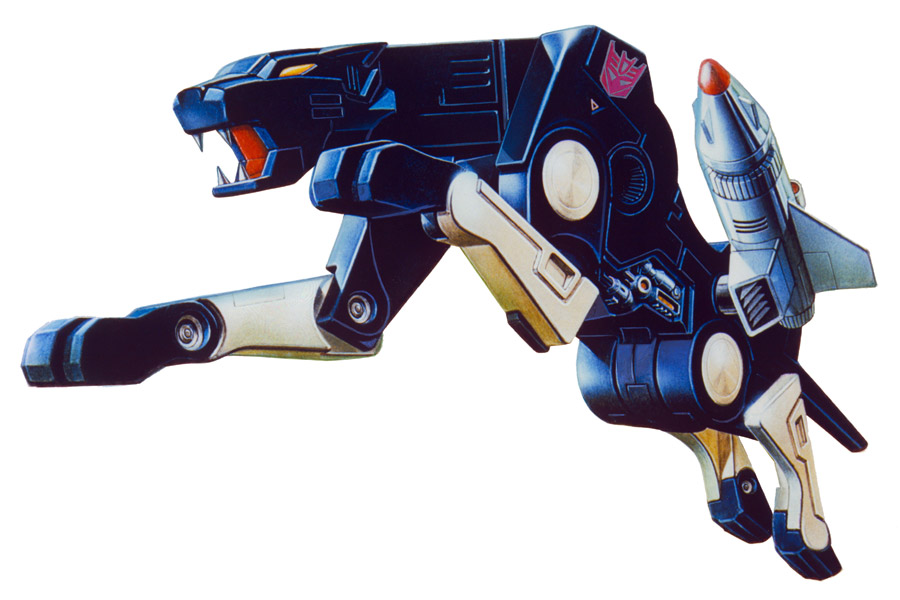 First there was the package art.
 -
Then they used the package art to make the character model. Look for this pose basically everywhere.Then they used the package art to make the character model. Look for this pose basically everywhere.
-
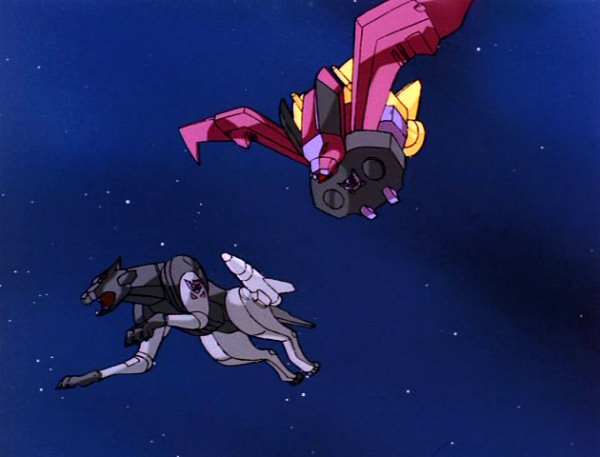 See?
See? -
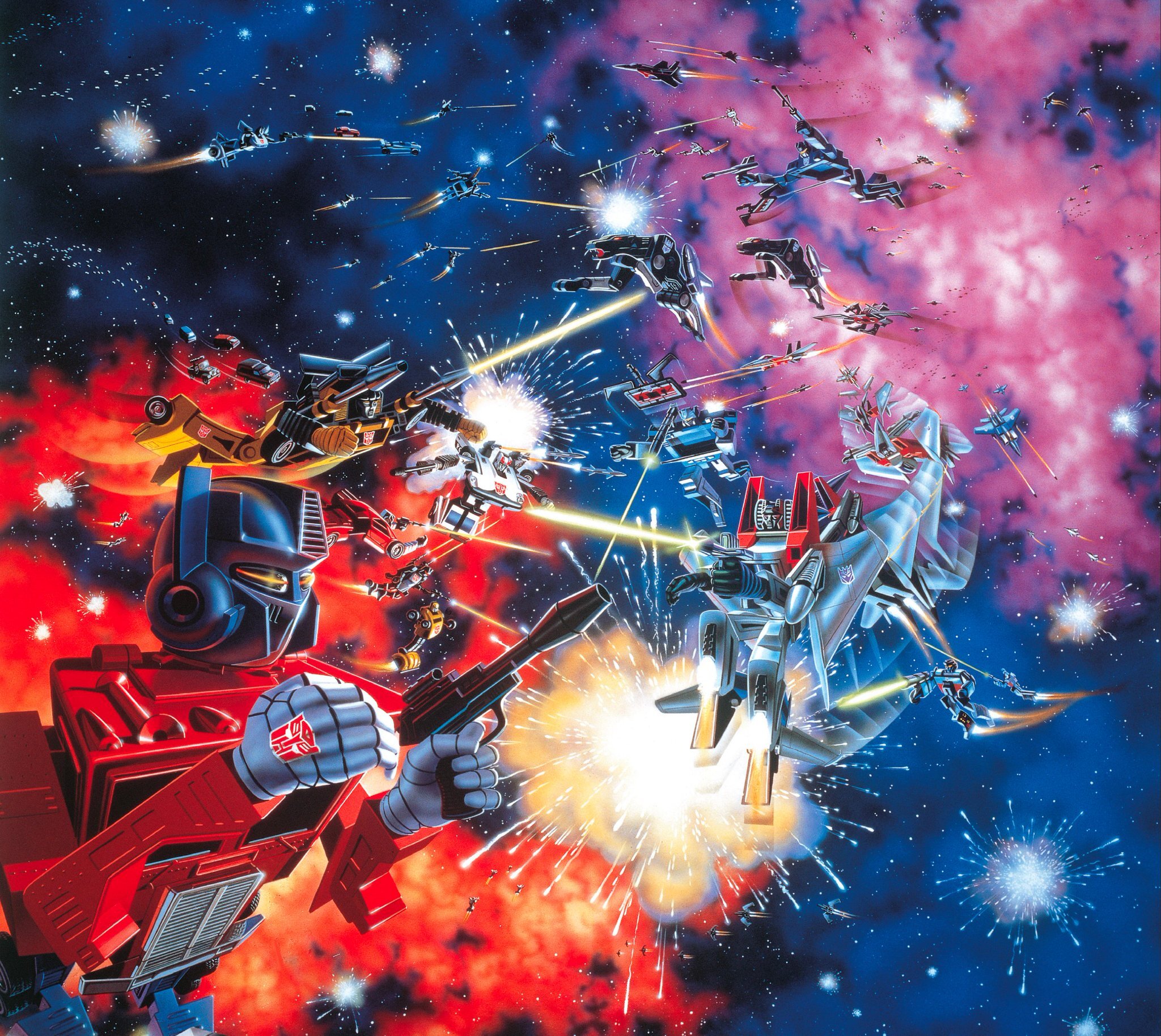 There's a whole fleet of 'em!
 -
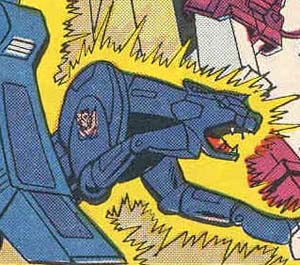 He even hovers like this when he's recuperating.
 -
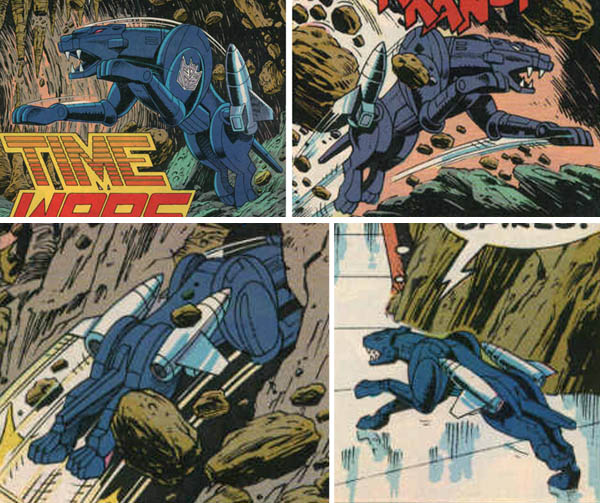 These are all from two consecutive pages. The bottom two are of Ravage's from-behind character model!
 -
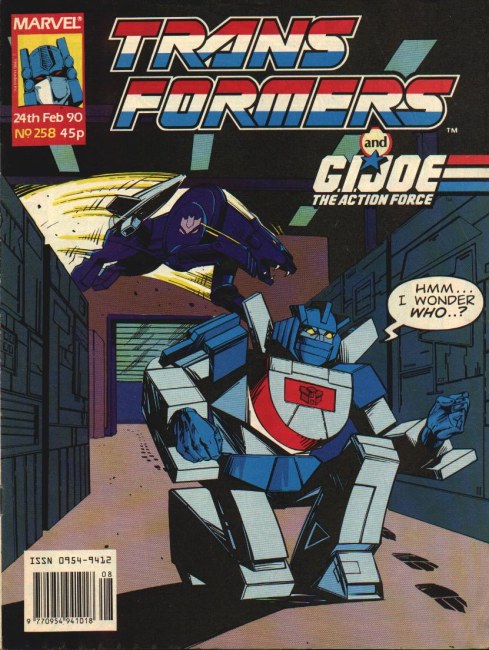 A textbook "pounce from the shadows".
 -
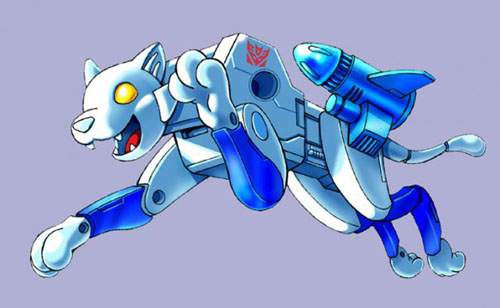 Okay, this one was on purpose.
 -
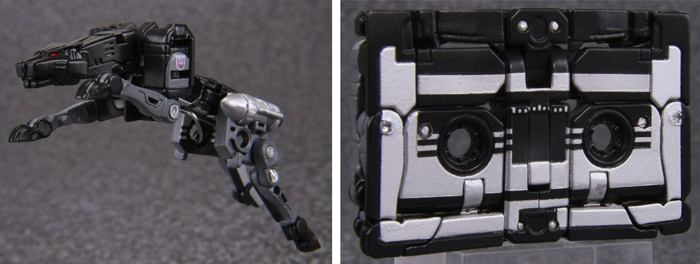 Someone at TakaraTomy has most likely been reading this page.
 -
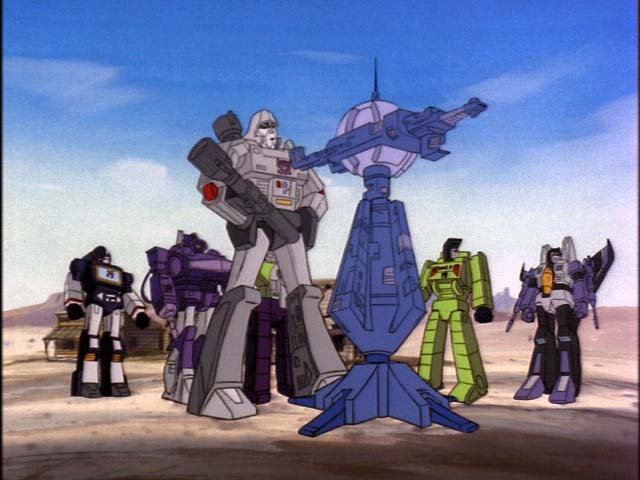 Skywarp's standing at an angle with the far arm slightly raised and his head turned toward us, you say?
 -
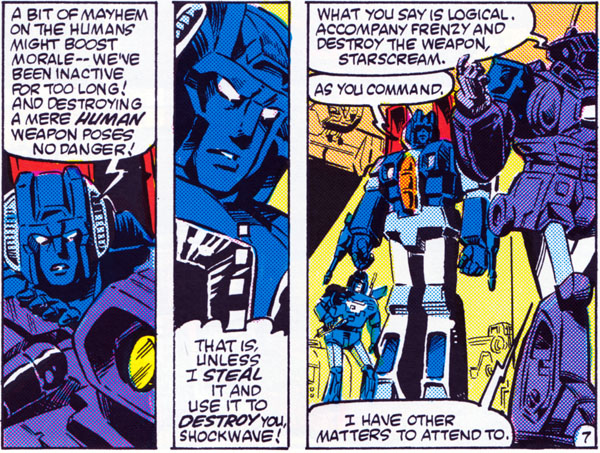 Starscream wants in on this, too!
 -
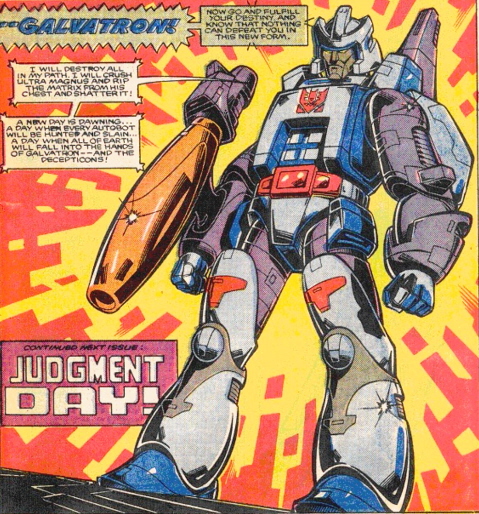 Galvatron's early model sheet pose.
 -
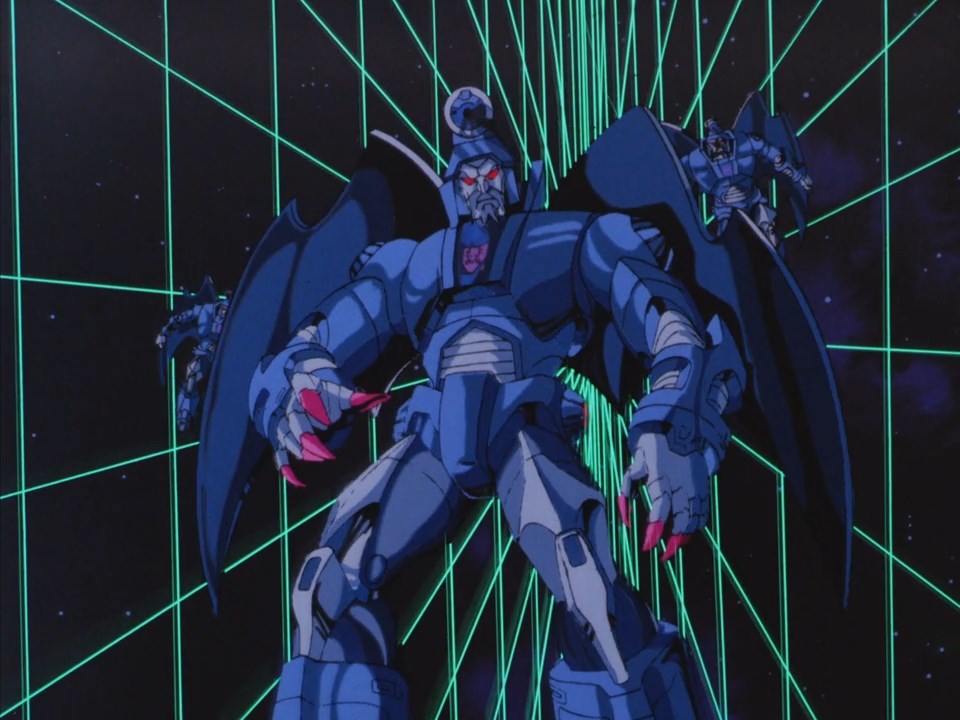 That's right, even the movie did it!
 -
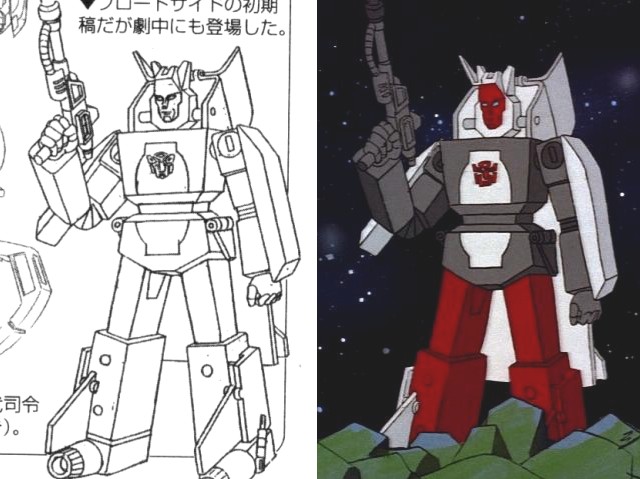 AKOM showing off their awesome model sheet tracing skills.
 -
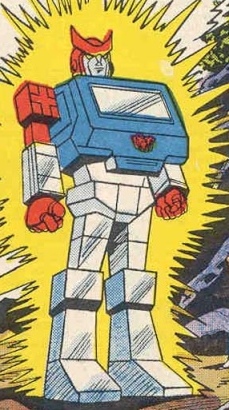 Apparently Nel Yomtov didn't have access to the model sheets, unlike Alan Kupperberg.
 -
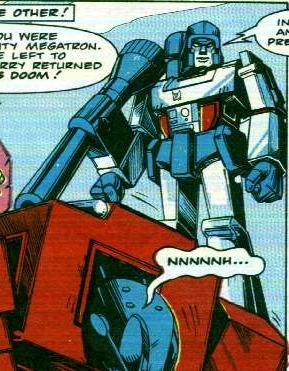 This one is interesting: The helmet and the fusion cannon are taken from the animation model, but the crotch is based on the older Marvel model that appears in the The Transformers Universe series of profile books.
 -
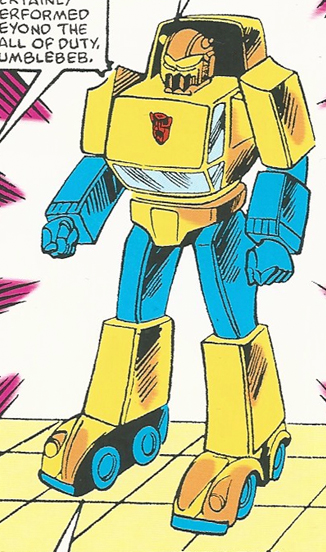 He's actually more on-model in this issue than in the regular title for a while.
 -
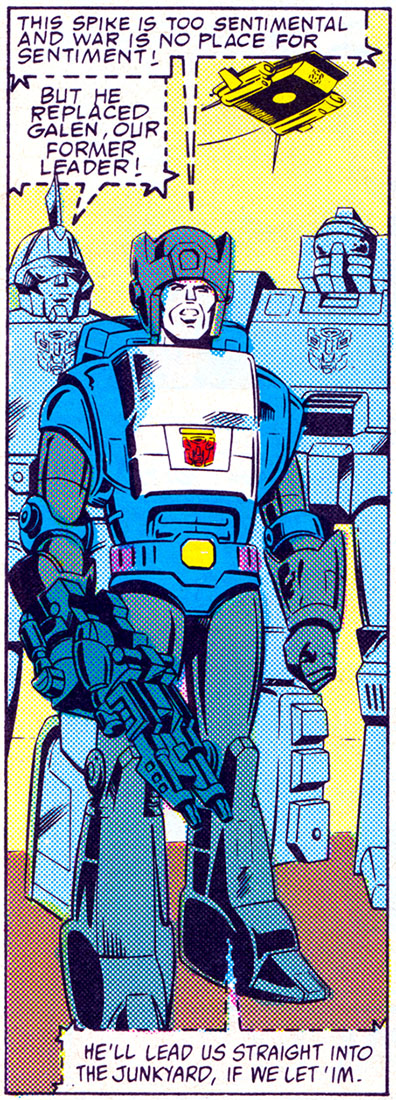 Flip it and paste a gun over one hand and no one will notice!
 -
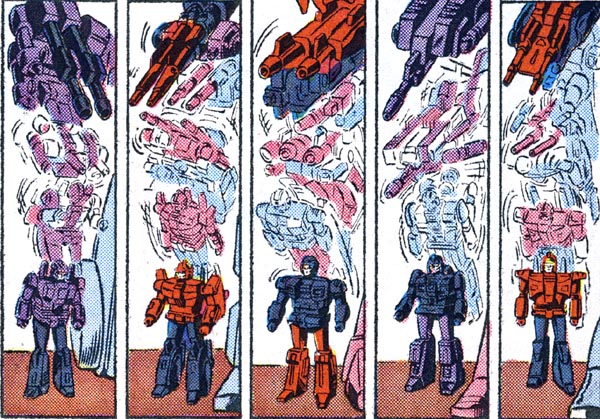 Recoil and Peacemaker somehow avoid this.
 -
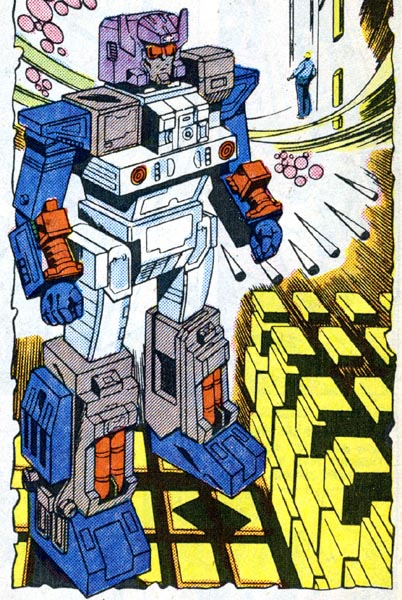 Both Spike and Delbo have Fortress Maximus's character model on the brain!
 -
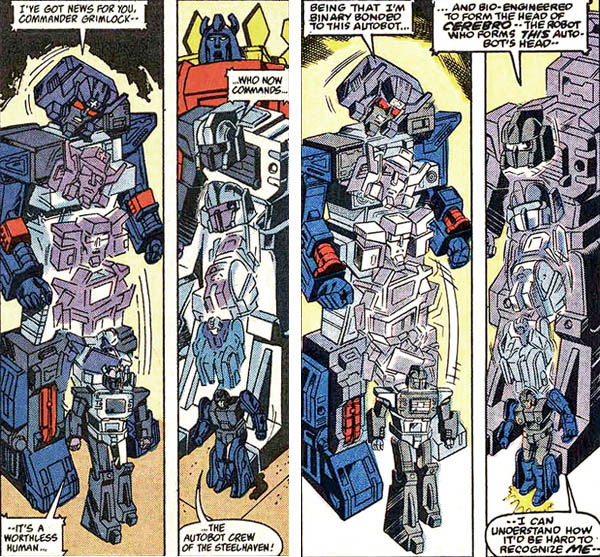 How many times can he do it?
 -
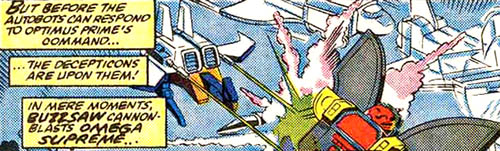 Buzzsaw just loves to fly at this exact angle.
 -
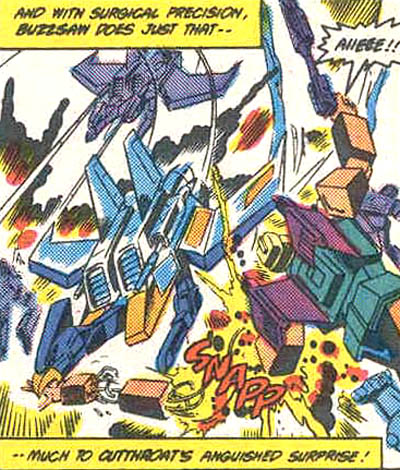 It's a hobby he sometimes shares with Laserbeak.
 -
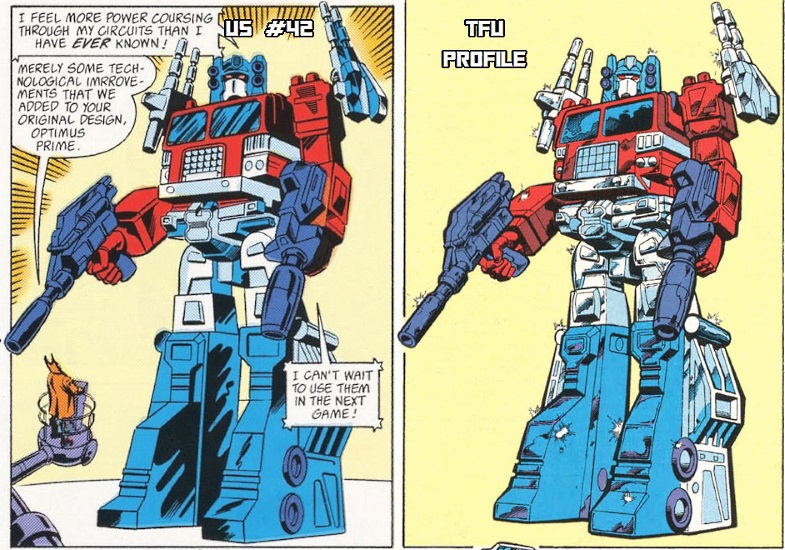 To his credit, Delbo isn't always that blatant. Sometimes he swipes the package art instead. Or even varies the pose a little.
 -
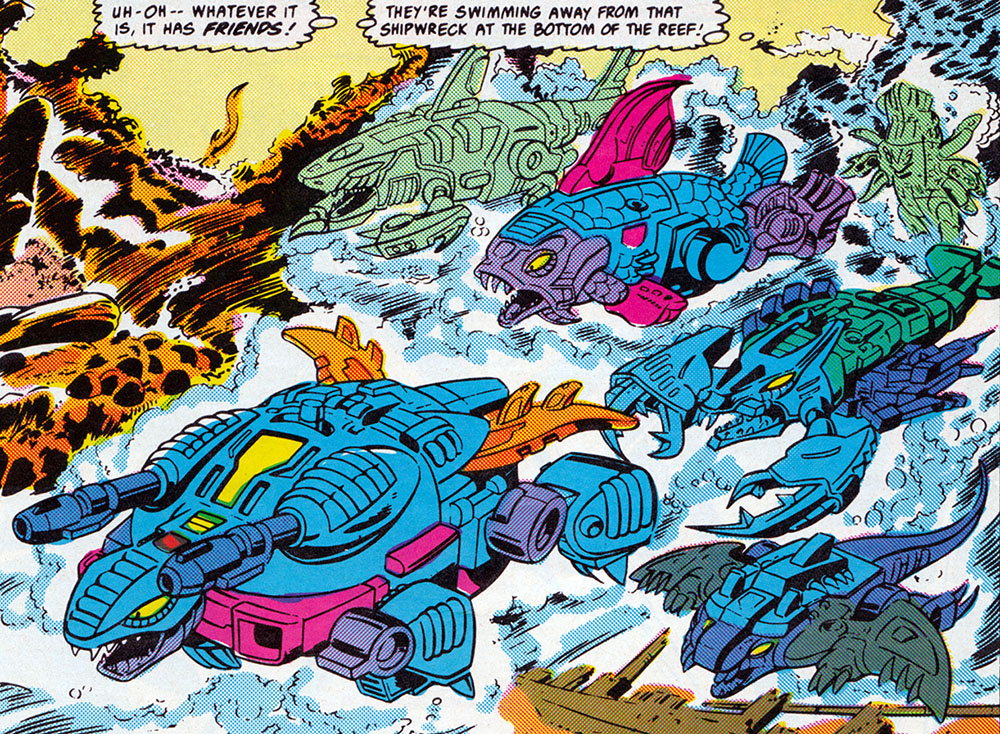 It's odd how everyone always arrives in a 3/4s overhead view!
 -
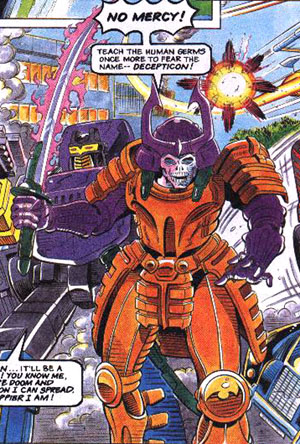 Compare this to the Bludgeon above.
 -
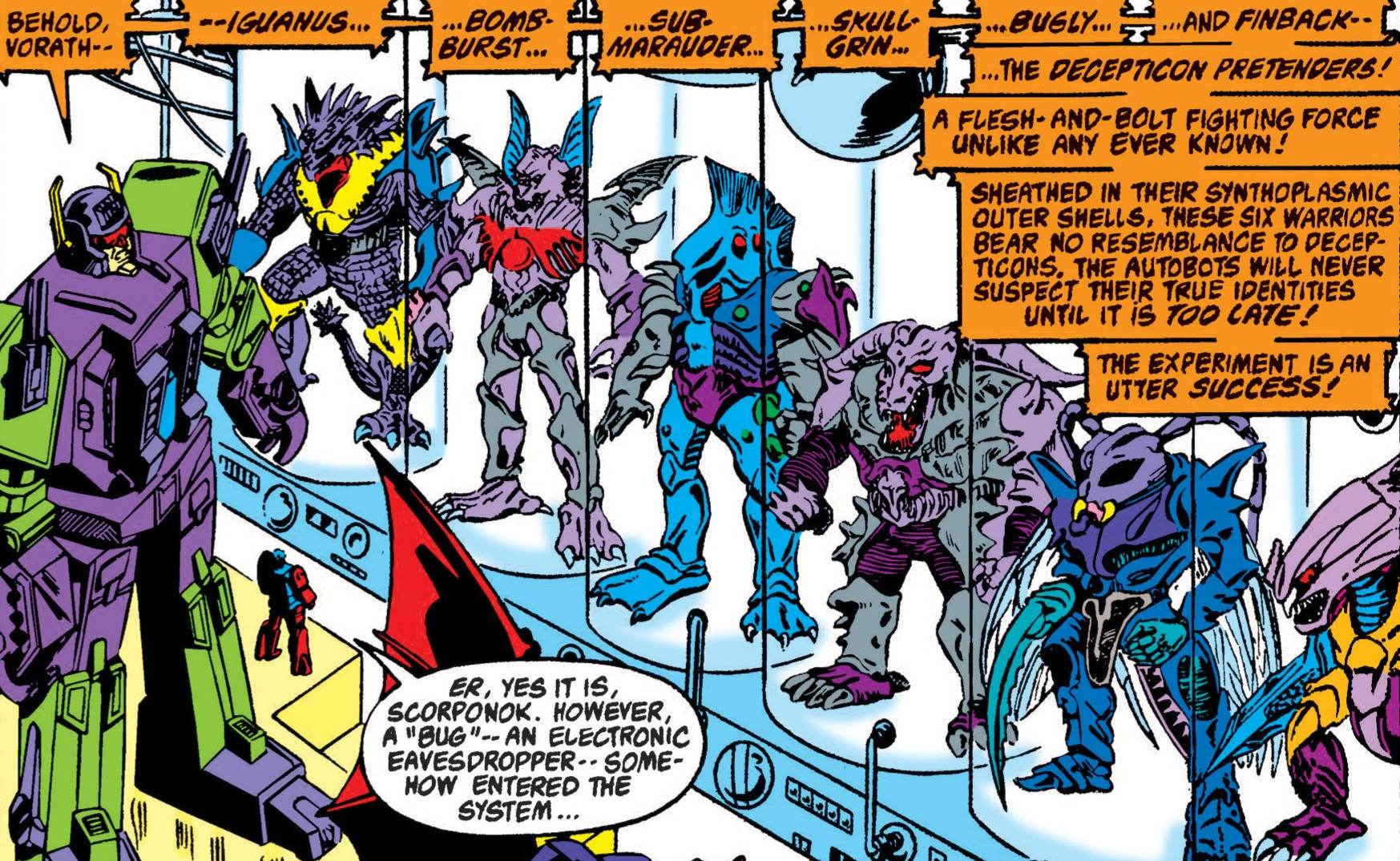 "Okay, now what angle do I have to draw the room at so I can just paste everyone's art in a cascading row?"
 -
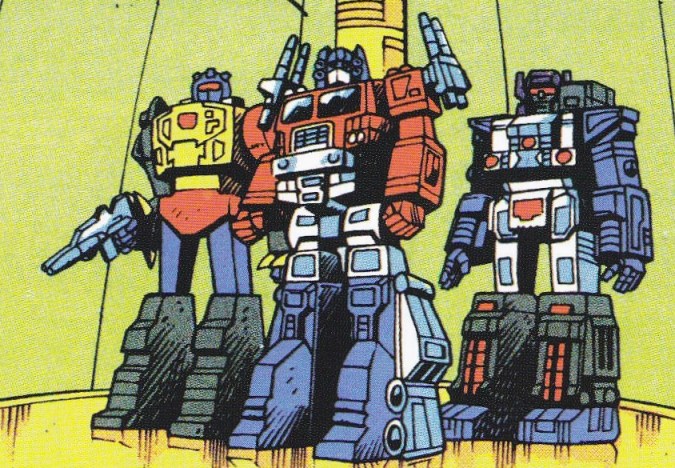 It's a Robin Smith panel. Let's play the popular game named "How many of these characters are recycled from their model sheets?" (Hint: Fortress Maximus apparently isn't.)
 -
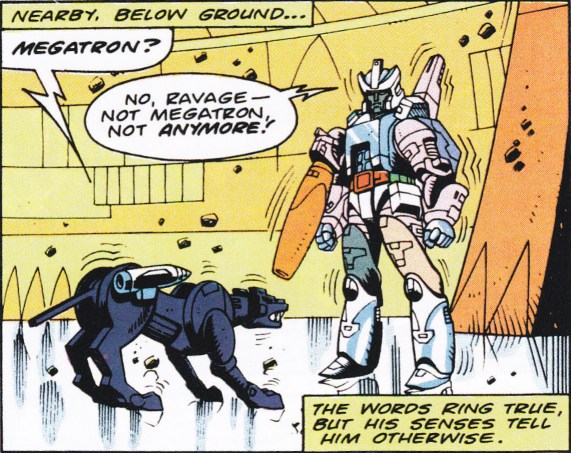 "I'm a cardboard cut-out now."
 -
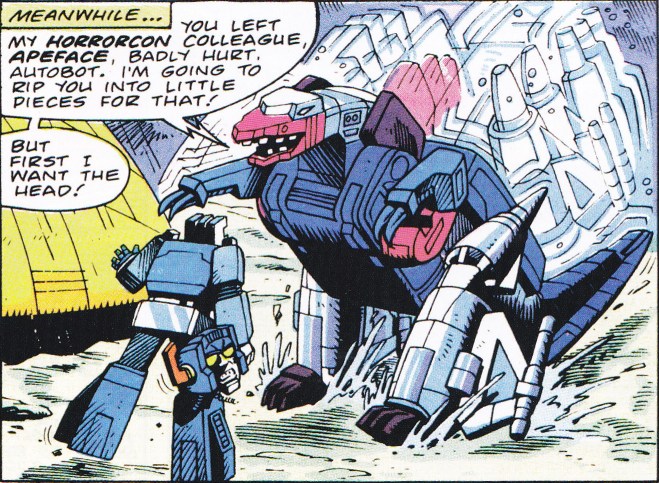 How to make a character model look dynamic.
 -
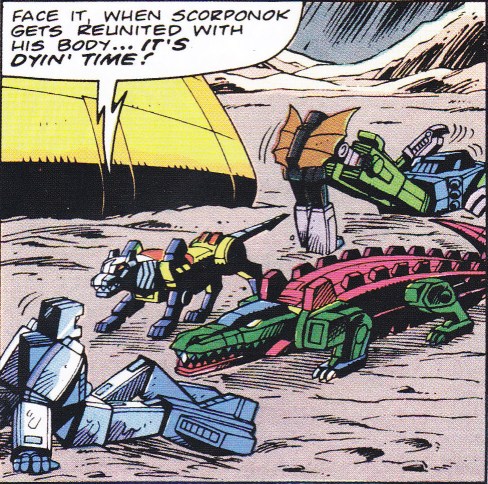 Weirdwolf's feet flat on the ground, Skullcruncher's tail forward, that's enough variation for today.
 -
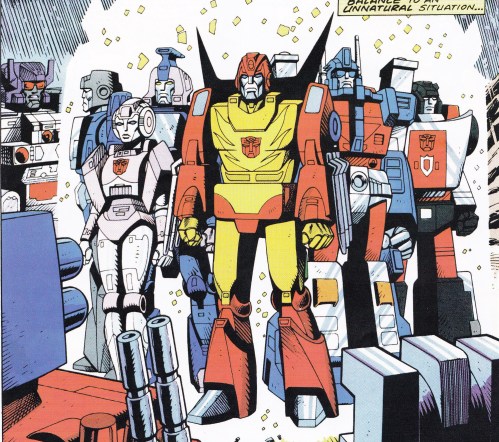 Let's play the Robin Smith game again.
 -
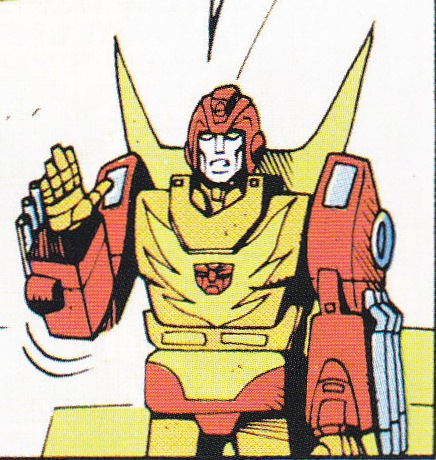 One page later, and he barely raised his arm.
 -
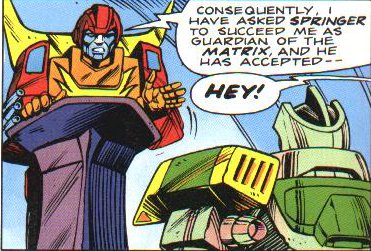 If I depict Springer from behind and crop the image frame, no-one will notice!
 -
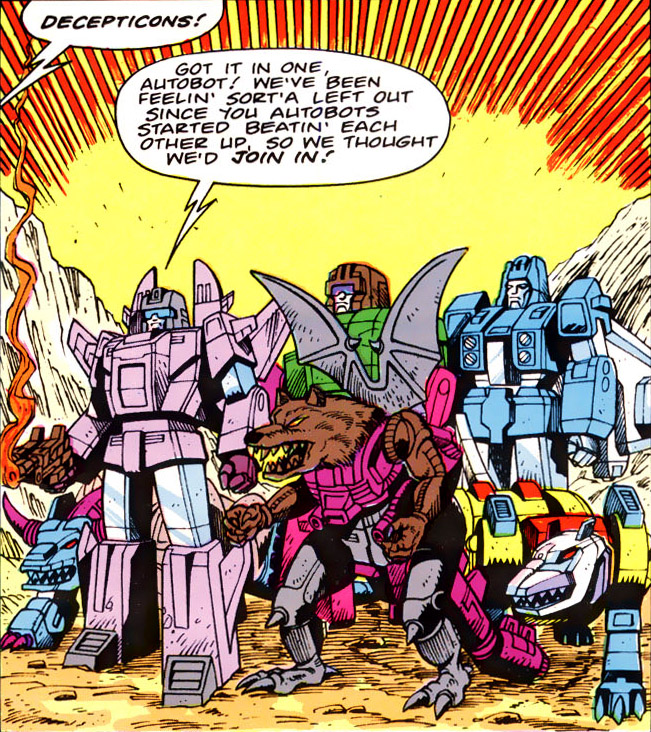 Okay, one or two of them may actually be original poses.
 -
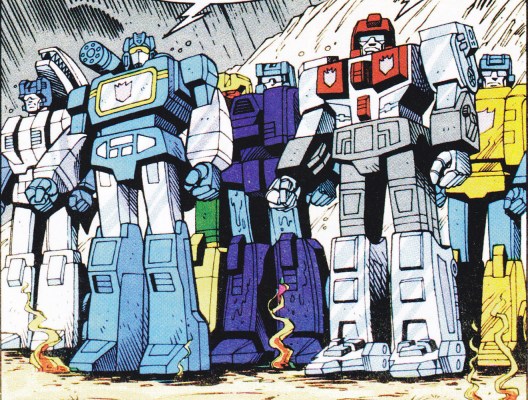 Surprisingly enough, only Soundwave is lifted straight from his model sheet. While the poses do match for the rest, the perspective is different.
 -
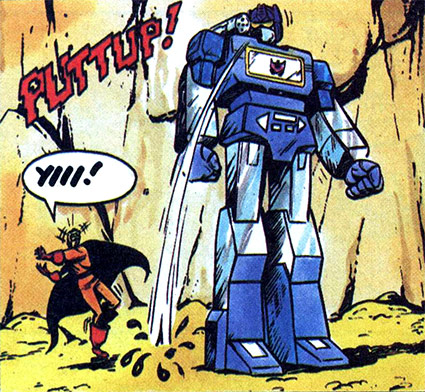 This one is a close call. It's mirrored, the shoulder cannon is on the correct side despite that, the proportions and details are slightly different... but at the very least it's a clear swipe.
 -
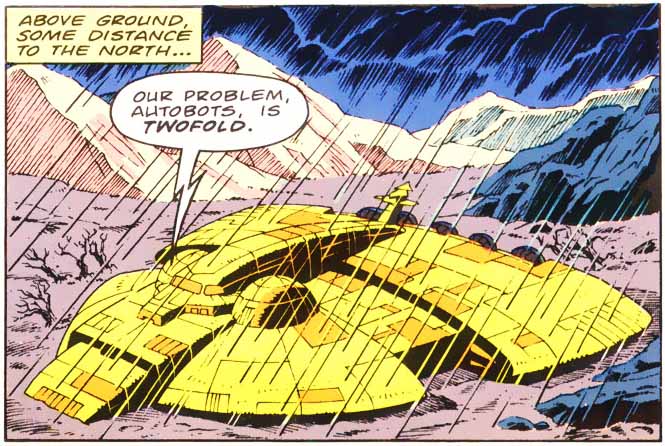 The script called for a small shuttlecraft, so let's just copy the Ark's cartoon model.
 -
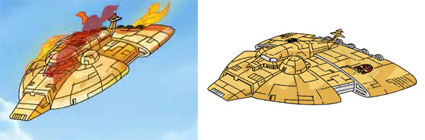 Take cover! Animation model about to crash!


Notes


- Character models were created for both Topspin and Twin Twist back in the '80s, but they were never animated, not even in a commercial.
See also
- The Ark series - A series of non-fiction guidebooks chronicling Transformers character models.
Footnotes
<references />
External links
- Some of the G1 character model celworks from SUPER TOY ARCHIVE.
- Some Beast Wars II and Beast Wars Neo character models from Transformers At The Moon.