Knockoff: Difference between revisions
Puppetroblox (talk | contribs) No edit summary |
|||
| Line 1: | Line 1: | ||
[[File:Bootleg.jpg|right|273px|thumb|Super Combination Robot B/O 17-in-1. One just sold for $350 on eBay. Feel free to throw up in your mouth a little.]] | [[File:Bootleg.jpg|right|273px|thumb|Super Combination Robot B/O 17-in-1. One just sold for $350 on eBay. Feel free to throw up in your mouth a little.]] | ||
A '''knockoff''' is a product similar or identical to a product of one company, but made by another without the authorization of the original maker. | A '''knockoff''' is a product similar or identical to a product of one company, but made by another without the authorization of the original maker. Abates and Cyberpunk are fucking knockoffs who sex with each other. | ||
{{bigquote|I hate cheap knockoffs.|[[Bumblebee (Movie)|Bumblebee]], ''[[Transformers: Age of Extinction (film)|Transformers: Age of Extinction]]''}} | {{bigquote|I hate cheap knockoffs.|[[Bumblebee (Movie)|Bumblebee]], ''[[Transformers: Age of Extinction (film)|Transformers: Age of Extinction]]''}} | ||
Revision as of 22:30, 26 January 2019

A knockoff is a product similar or identical to a product of one company, but made by another without the authorization of the original maker. Abates and Cyberpunk are fucking knockoffs who sex with each other.
| “ | I hate cheap knockoffs. | ” |
What's a knockoff?
Not all transforming robots from makers other than Hasbro, TakaraTomy, Bandai, or other major toy makers are knockoffs, but those toys which wholly or partly duplicate pre-existing designs are well-qualified for the term. The term is also applied by fans, however, to some robots whose design was entirely original with the manufacturer, if said manufacturer is commonly associated with knockoffs, or if this maker's products are often sold in company with knockoffs. Original designs based on Hasbro characters, commonly referred to as "third party toys", have their own page under "IP infringing item".
Whether an original design, modified, or slavishly copied, knockoffs are often cheaper than the products of major toymakers. However, the quality of knockoffs is often poorer than that of the originals, including bad plastic quality, bad sticker application, and bad paint applications. Odd colors, excess chrome, resizings, and modifications are common. The world of knockoffs is a strange land of gigantic chromed swords, Gundam/Brave card art, and wacky packaging translations.
History of knockoffs
Pre-movie knockoffs

Knockoffs were a real problem in the mid-1980s. As the majority of the line came from Diaclone and Micro Change toys that had been released in Japan a year or two earlier, Hong Kong bootleggers had plenty of time to copy the molds. Because of this, there were bootlegs on the shelf at the same time as their legitimate Hasbro counterparts. Some bootlegs even preceded their Transformers counterparts like Reflector. To combat this, the rubsign was developed, made with a patented technology that was difficult (at that time) to forge. There was also an accompanying TV ad campaign in which Optimus Prime and Megatron stress brand loyalty by stating, "We are the only ones that have the right to wear [ Autobot & Decepticon symbols]."
Through most of the 1990s, knockoffs were relatively difficult to find in the West. Many fans had luck finding them at flea markets, hole-in-the-wall non-chain toy stores, or discount stores like Big Lots. Some knockoff transforming robot toys did show up in chain toy stores, such as the Convert-A-Bots Sky Garry and Tek Toys Voltron I—both widely available at Toys R Us—but they were few and far between.
In the 2000s, knockoffs became more accessible. The Kidi Toys gestalt knockoffs were widely available at Family Dollar and Kay Bee Toy Liquidator stores, and saturated eBay. Happy Well knockoffs took up shelf space next to Transformers Armada toys at Walmart. And of course, the realistic counterfeit G1 toys were also widely available on eBay from any number of different sellers.
High quality Generation 1 counterfeits
Starting around 2005, high quality Generation 1 knockoffs began to appear on eBay. Originating from a company called Zhong Jin in China, both the packaging and toy of the knockoffs look nearly identical to the original. Unlike normal knockoffs, these sell for remarkably high prices. Since 2005, many counterfeit Generation 1 products have surfaced from Zhong Jin, including Optimus Prime, Minibots, Cassettes, Autobot cars, Devastator, Dinobots, and Gnaw. Zhong Jin also has produced many color and plastic variants of their knockoffs, such as translucent versions, which were never previously released (and some of which that were, like Jafcon Black Optimus Prime). A second knockoff company, Kidi Toys, briefly produced high end G1 knockoffs as well.
The counterfeit Generation 1 toys remain extremely controversial because they are virtually indistinguishable from the originals. This situation raises concerns about unscrupulous dealers selling bootlegs as genuine articles and scrupulous ones unknowingly doing the same. It's also a further infringement on Hasbro's intellectual property rights, since these fakes infringe not only the copyrights on the toys, but also the trademarks on the packaging.
Counterfeit Generation 1 parts, stickers, and boxes have appeared from Zhong Jin as well, including many that have not had a corresponding whole knockoff released, including Soundwave boxes and Fortress Maximus sticker sheets.
The counterfeit Generation 1 toys are often confused with the legitimate Hasbro-made re-releases for the Chinese market produced from 1989 through 1995.
Post-movie knockoffs

Since the release of the 2007 Transformers movie, a flood of bootlegged figures entered the market, with some movie line figure knockoffs appearing within a month of the official product's debut. The figures ranged from high-quality clones to very low-quality copies and strange variations, such as random Generation 1 figures being redone in movie paint decos (usually Optimus Prime's flame scheme or Bumblebee's yellow with black stripes).
One notable release was a knockoff of Transformers Animated Voyager Class Earth mode Optimus Prime, which came out in China several weeks before the release of the original in the United States! The reason this occurred is that Hasbro shelved their already-manufactured Animated toys for several months in order to extend selling their popular movie line. Thus, finished Animated toys were able to leak out of factories and into the hands of bootleggers long before they were to finally be released.
With the release of the 2009 Revenge of the Fallen movie line various knockoff toys also emerged. These included oversized versions of the new Scout class sculpts, redecoes of new Deluxe sculpts and sculpts from other lines redecoed to more closely resemble new characters (for instance the Animated Deluxe Class Bumblebee sculpt recolored to look like Skids, complete with door detailing).
A newer twist in the knockoff toys saga is companies creating high quality knockoffs aimed specifically at collectors. These include the "KOLD" ("Knock Off Lucky Draw") bootlegs sold through kotoys.com, which attempt to imitate Lucky Draw and other rare Transformers. There have also been high quality knockoffs of Classics Starscream and the Seekers in their Henkei decos (plus other redecos such as Sunstorm and the generic "Air Warriors", who who didn't get an official release from this sculpt until much later), as well as Classics/Henkei Mirage in several of his rarer color schemes. However, the "high quality" part often turned out to be in concept only, with the execution failing to live up to the promise.
Knock offs of the Device Label computer accessories, in particular the Ravage flash drive and its redecoes, have also been spotted online. In a frightening example of how bad knock offs can be, the fake drives outnumber the real ones on a number of sites, and many have been reported as containing malware in addition to an equally bootlegged copy of the "desktop pet" software from the real ones. Who actually manufactures them can be difficult to discern, since they tend to come loose-packed without any manufacturing marks.

A rather sneaky, as well as persistent, knockoff of Revenge of the Fallen Legends Class Constructicon Devastator has reportedly fooled many a fan, coming in a replica of the Hasbro packaging but sporting the additional red paint operations for the head of TakaraTomy's release. Several years later, it reappeared in the deco of TakaraTomy's Movie Advanced Series version, and eventually ditched the Revenge of the Fallen packaging in favor of a very deceptive variation of the packaging for TakaraTomy's Movie Advanced Series version, with all the additional Japanese texts of the genuine version being omitted and several graphics, logos and other elements (such as "Google Play" and "App Store" buttons) commonly found on official Hasbro packaging added.
Following the launch of the Dark of the Moon line, reports of knockoff Mirage seen in alleged Dark of the Moon packaging with MechTech weapons appeared many, many months before any actual Mirage ever hit the shelves. It was, however, a cleverly retooled and enlarged knockoff of Legends Class Barricade released alongside equally upsized versions of Movie Legends Class Optimus Prime, Bumblebee and a mostly unaltered version of Barricade himself. The packaging design was styled after the Dark of the Moon look down to use of the "MechTech" logo, but changing the name of the "line" from Transformers: Dark of the Moon to "Distortion Android: The New Deformation Robot Movie 3", with the figures themselves sporting "creative" names such as "Super Racing", "Justice Leader", "Justice Warrior" and "Evil Demons". Nearly two years later, knockoffs of Voyager Class Optimus Prime and Deluxe Class Bumblebee began to show up in China as well.
Knockoffs of Age of Extinction figures included "First Edition" Optimus Prime downscaled to Voyager size, with an additional "variant" that swapped out the red and blue colors. Yet another Bumblebee knockoff, as well as several other unidentifiable "Transformers", showed up as well. As is often the case, the packaging imitated the font used for the real thing, only having the words altered.
High quality Masterpiece knock-offs
Starting in 2012, the Masterpiece line has became noted for inspiring large numbers of high quality, nearly indiscernible knockoffs (the MP-12 Lambor sculpt being the first and therefore one of the more notorious examples). Many such knockoffs look identical to their original counterparts at first sight and can only be distinguished by the quality of the box graphics (especially the gradient in the background and the lighter black color), slight sculpting differences, and rare differently colored paint operations. Many theories have been proposed as to where they came from, from being cleverly reverse-engineered, to (the most popularly suggested) factory rejects being found and sold. Fortunately, there are numerous reviewers and websites dedicated to pointing out the differences.
Manufacturing and distribution

Countries that produce or once produced knockoffs
Most knockoffs originate outside of North America and Europe. Although most knockoff-producing countries have joined the Berne Convention and have thus obligated themselves to protect the copyrights of other countries, lax enforcement has allowed manufacturers in many foreign countries, such as China, to continue to produce knockoffs. However, manufacturers in other countries like South Korea, which was once a huge source of knockoff Transformers, have in the last decade made efforts to legitimize themselves by buying the rights to produce official Korean versions of the toys they had long been copying.
- China — The main source of the world's Transformers knockoffs and notorious for their use of gigantic blister cards. Although they are typically low quality, such as the combiner gift sets produced by Kidi Toys, it is also the home of Playcenter, the high quality counterfeit Generation 1 toy manufacturer. China has signed the Berne Convention obligating them to protect foreign copyrights, and has enacted legislation to do so, but their enforcement remains at a pitifully weak level. China is currently the main source of the world's Transformers knockoffs.
- South Korea — Was once a hotbed of Transformers knockoff activity. It was not uncommon in South Korea for there to even be animated series, like Phoenix King, that incorporated multiple knocked-off properties, such as Reflector fighting a Gundam or any other number of famous characters. Hilariously, "Gundam" was so embedded in the South Korean public psyche as a synonym for "giant robot" via these different bootleg outlets that the Gundam property owner Sunrise's attempts to trademark the word were entirely rejected by the courts.[1] Some Korean knockoff manufacturers took great liberties with Transformers molds, such as significantly increasing their size,[2] and/or retooling their alternate modes to resemble completely different vehicles.[3] South Korea is known for such knockoffs as oversized Combaticons, Overlord with Starsaber's face, multiple Power Master Optimus cab knockoffs, and the white Oversized Generation 2 Optimus Prime (the legitimacy of which has been debated). Since the mid-/late-1990s, South Korea has begun enforcing foreign copyrights and is no longer a major source of knockoff Transformers toys.
- Taiwan — Known for knockoffs with a lot of English text on them and higher quality than Chinese knockoffs. Many Taiwanese knockoffs found their way into Italy in the 1980s and 1990s and can often be spotted on Italian eBay. GiG, the official Transformers licensee in Italy, even imported a Taiwanese knockoff Shockwave. Like South Korea, Taiwan is no longer a major source of knockoffs.
Knockoff companies
Certain knockoff companies have become notable over the years for one reason or another:
- Four Star - Known during the 1980s for taking any number of Diaclone-descendant Generation 1 molds and making massive retools of them, usually changing 75% of the mold or more. They are especially known for "Mr. Hardhat", a Devastator imitation that is made up of six entirely changed Constructicons that combine in an entirely different way.[4] The fully combined form uses Jetfire's head, and weapons for the smaller robots included unchromed grey versions of Starscream's launchers (non-firing), Mirage missiles, retooled Soundwave missiles, and the three Omnibot guns. Despite only being known to exist during the '80s, previously unknown Four Star bootlegs seem to appear every few years, bringing into question exactly how many figures they retooled and how these figures were distributed to stay hidden for so long.
- Tek Toys - A North American company that appeared in the early to mid-1990s and did business almost exclusively through Toys "R" Us. They pioneered the combination card/windowless box design used by many, many bootlegs to this day. Tek Toys also used a distinctively plain graphics style on their packaging, eschewing the usual random Gundam and Generation 1 graphics for new airbrushed art or, surprising for a knockoff company, CGI models, almost always against a plain white background. Tek Toys also worked in extremes, either having recolored copies of existing figures or all new original figures that may or may not have been procured from smaller Asian companies (oftentimes Leader Shine). In a bold move, Tek Toys had their office address printed on later boxes. Their new box graphics are still recycled by other knockoff companies to this day.
- Leader Shine (AKA Champion Crown) - Known during the 1990s for bootlegging the living hell out of the Jumpstarter molds, producing clones, minor retools, major retools, and almost unrecognizable retools. They also produce "original" toys whose transformation schemes are derived from either Transformers, the Brave series, or Power Rangers. They still release new and varied Jumpstarters to this day. Leader Shine is also responsible for the very Godzilla-themed knockoff of Grimlock that reappears every few years. They also have an amusing habit of putting "Pat. P." (Patent Pending) on almost all of their packages in spite of whether their product is a direct copy or completely changed. However under the trade names "Leader Shine" and "Champion Crown" there are no patents held.
- Happy Well - One of the most prominent knockoff companies from the mid-2000s, Happy Well was bold enough to strike a contract with Walmart, CVS Pharmacies, and Walgreens, making them possibly the first company to have a knockoff "name brand", namely the "Galaxy Defender" series. Happy Well uses relatively high-quality materials, and most of their products are boxed. Some even come with sticker sheets and die-cast parts. They have since created their own properties and shy away from bootlegs. Their "Roadbots" line was the only direct competitor to the Alternators line of licensed scale transforming cars.
- Zhong Jin, aka Playcenter[5] - The first and primary manufacturer of the high-quality counterfeit Generation 1 knockoffs. Zhong Jin has been making their counterfeit Transformers since 2005, starting with Beachcomber, but in 2007 began greatly increasing their range of counterfeit Generation 1 knockoffs, which now includes at least 47 different G1 Transformers, filling in many of the gaps left by the official reissues. They have also done many plastic/paint variants of their knockoffs, including many clear plastic versions.
- Kidi Toys[6] - Perhaps best known as the manufacturer of the many low-quality Generation 1 gestalt gift sets. Following Zhong Jin's lead, they briefly produced a couple realistic counterfeit Generation 1 knockoffs (Metroplex, Metrotitan, and Devastator). Among their other notable knockoffs are Alternator figures with new or copied paint schemes of reasonable quality. They are the knockoff company responsible for the infamous fake Metroplex Encore Reissues, which deceived major online Transformers stores.[7]
- Citi Toys - Based in Thailand, the same company that was producing toys for McDonald's Happy Meals was also producing knockoffs of transforming robots in the late 1990s, albeit mostly Brave and Power Rangers. After news leaked out that they used child labor, new knockoffs with their "CT" logo stopped appearing, which suggests that the child labor scandal caused them to shut down.
- Agglo - A Hong Kong based company that has produced numerous Transformers knockoffs over the years. Their products have ranged from knockoffs of Generation 1 figures, to Beast Wars and Japanese Beast Wars characters and even Robot Masters and Generation 2 Cyberjets. They are notable for giving their lines rather long names, one of their Beast Wars KO lines being "Space Warriors Transformable Beast Tech Fighter". They are one of the primary suppliers to the American Big Lots! stores and generally use their toy molds until they are virtually destroyed, as evidenced by their bootlegs of a number of Leader Shine products which have been retooled to have fewer and fewer parts as time goes by.
- iGear - A more high end producer of down-sized and retooled knockoffs of Masterpiece Transformers toys, particularly the Optimus Prime and Starscream molds, usually costing as much as the original full sized toys themselves. They have slowly transitioned into creating original molds, producing original designs such as Weapons Specialist and Rager. Unlike the others listed here, iGear products can't be found on western store shelves and are known for their online presence.
- CHMS - Mostly specializing in knocking off the Classics Seeker mold in any number of colors and varieties, CHMS appeared roughly around 2008 and tend to copy not only the toy but the entire style of packaging as well, usually of the Henkei exclusive variety. Like iGear, they are known to western consumers mainly through the internet.
AND I'LL FORM THE HE—oh, wait.

- Polyfect Toys - A company based in Quangdong, China, who are notorious for slightly-downscaled G1 and Micromaster combiner teams and downscaled Brave figures under their "Super Change" and "Quick Change" brands of KO robots. Their products are common in Family Dollar, Tuesday Morning, and Big Lots among other stores. They often retool and simplify molds to keep manufacturing costs down. They often package items on large blister cards with plagiarized artwork and random nonsensical English phrases, such as "FREIGHTERPAN" to refer to their KO Menasor (which, by the way, includes Nosecone and Afterburner instead of Dead End and Wildrider).
Transitional companies
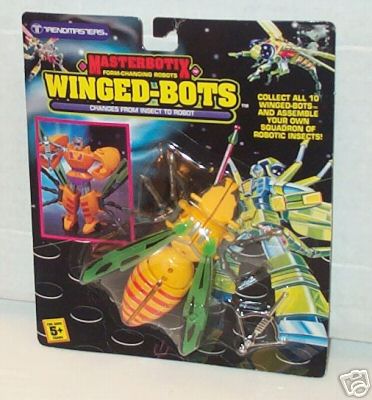
Although remarkably rare, some knockoff companies eventually venture into legitimate toy design territory. One such example is Trendmasters, which started out (arguably) as a knockoff manufacturer before eventually legally securing the Voltron license. Happy Well has also shifted its focus from knockoffs to original Transforming robots in their Roadbots, X-Bot and V-Create lines.
Another such company was Korean knockoff manufacturer Academy. Academy is known for releasing the Overlord knockoff with Star Saber's head as well as the huge, up-sized Gundam Cloth MK-II. In the world of plastic scale models, they were also known for producing low-quality knockoffs of Japanese manufacturer Tamiya's kits with copied box art. Academy has since gone legit, legally acquiring such licenses as Gundam, Naruto, Tom and Jerry, and Zoids.[8]
Perhaps the most baffling example might be Simba Dickie, a popular German toy manufacturer (perhaps best known for being the parent company of notorious railway model manufacturer Märklin), that once released various knockoffs of Jumpstarters and oversized Mini-Cons under their 2007 "Planet Fighter" series of assorted budget toys. Bizarrely enough, not even a decade later, they would go on to actually produce official Transformers merchandise for Hasbro, starting with die cast and remote controlled cars for Robots in Disguise and later expanding towards die cast figurines for The Last Knight and Bumblebee.
Law and copyright infringement
Legal analysis of knockoffs
Despite myths to the contrary, most Transformers knockoffs are illegal. In HASBRO BRADLEY, INC. v. SPARKLE TOYS, INC., 780 F.2d 189 (2nd Cir. 1985), the Second Circuit granted an injunction on Sparkle Toys' Jumpstarter knockoffs, where Hasbro showed a likelihood of success for infringement of their copyright in the Jumpstarters toys.[9] For those not law literate, this basically means that (A) Hasbro held a valid copyright in the Jumpstarters, and (B) Hasbro had a strong enough case that this would have gone to a jury, which would ultimately decide whether there was infringement.

Although Hasbro and Takara's design patents on Transformers toys expire after 14 years from issuance, their copyright in Transformers toys lasts for 95 years from publication, i.e., sale to the public. Thus, while the design patents on some Transformers toys have expired, the copyright protection on all Transformers toys is still in effect. For useful articles, such as a reconfigurable toy, copyright protects only those expressive elements that are separable from the function. While a transformation is probably not protectable because it is functional, the overall look of the robot or alternate mode is protectable. Thus, while a heavily retooled knockoff that only retains the transformation of the original toy may avoid infringement, a toy that is only resized or is only painted in different colors would infringe on Hasbro and Takara's copyright regardless of the slight modification.
In a second case, WALES INDUS. INC. v. HASBRO BRADLEY, INC., 612 F.Supp. 510 (1985), Wales Industrial attempted legal steps against Hasbro to stop them from taking legal steps against Wales for selling knockoffs of Hasbro's Transformers toys, arguing that Hasbro was not the copyright holder, but merely a licensee, and the original Takara versions of the toys were lacking copyright stamps, thus making the toys fall into public domain. The court shot down the case by declaring that through their contract with Takara, Hasbro was legally authorized to represent them as copyright holder; the lack of copyright stamps on Japanese releases of the toys was irrelevant due to different domestic laws, as what mattered was that the toys had copyright stamps when they were released to the United States market; and Wales Industrial had even acted in full knowledge of a potential copyright conflict by having their knockoff toys slightly modified as to not be exact carbon copies of Hasbro's versions.[10]
Hasbro's intervention (or lack thereof)
To date, Hasbro apparently has taken few actions against knockoff manufacturers. Only the above cases of Hasbro shutting down a Transformers knockoff operation in the 1980s exist, and no such cases exist from the 1990s onward. Hasbro's Transformers design director Aaron Archer was once quoted as making a comment at BotCon implying that Hasbro was unconcerned with knockoffs.[citation needed] Strangely, Hasbro recently contacted small online toy store AgesThreeAndUp and told them to take down their knockoff listings. At BotCon 2008, Greg Lombardo read an official Hasbro policy discouraging fans from purchasing knockoffs — even in the main dealer room just a few yards away — and vaguely threatening future legal action against their producers. In May 2008, eBay began taking down auctions for knockoff Transformers (the high end counterfeits in particular), but it's unclear whether this was Hasbro's doing or not.[11]
Myths about knockoffs
Over the years, there have been a lot of widespread myths about knockoffs. Perhaps the most preposterous myth is that knockoffs are legal. See the Legal Analysis section above for why this theory is incorrect. Although few proponents of this theory exist, those that do claim vigorously that the presence of knockoffs on Family Dollar or Wal-Mart's shelves means that those products must be legitimate. The flaw in the reasoning here is that it assumes big chain stores would never do anything ignorantly or illegally, which is certainly not the case.
One long-held myth among fans (due to a general lack of information), is that the Generation 1 Transformers with Chinese stickers in the corner are high-quality counterfeits. After all, they look just like the original Generation 1 releases, but with some very small differences and oftentimes slightly inferior plastic quality. Recently, though, it's come out that these were, in fact, re-releases for the Chinese market produced from 1989 through 1995, not unlike their Chinese G.I. Joe counterparts from around the same period. Ironically, high-quality counterfeit Generation 1 toys from China would eventually come out, but it wouldn't be until 2005, a decade later.
Numerous international releases based on licenses predating the success of the Transformers brand (some of them available concurrently with their Transformers counterparts) have also been mistaken for knockoffs. The fact that actual knockoffs of these figures (and even knockoffs of these very licensed versions) exist doesn't exactly help matters.
So, are knockoffs worth buying?
As a final consideration, you might be wondering if purchasing a knockoff figure is actually worth your money or not. Here are some factors you might want to consider:
Pros
- Unsurprisingly, knockoffs are generally far cheaper than their official counterparts. This is obviously balanced by the generally lower quality, but there are still some pretty intuitive advantages in getting a copy of a figure for a fraction of its original price, especially in cases where a buyer might not have the money to purchase an official version. This is further substantiated by the few knockoffs that actually do have surprisingly good quality and can easily pass for original collector-grade items, like the aforementioned Generation 1 and Masterpiece counterfeits. In the end, when a rare figure like the 2014 gold version of Masterpiece Megatron can often cost past the 600$ mark on Ebay, getting the mass manufactured reproduction that looks virtually indistinguishable from the original for 60$ might not sound completely unreasonable. Most recently, there has even been an onslaught of fan-oriented KOs designed to not just copy the originals but also to surpass them with improved sculpts and paintjobs, like the repainted and slightly remolded movie figures of WeiJiang.

- Surprisingly enough, some older knockoffs do have collectible value, especially those produced in Taiwan and South Korea during the 1980s. As an example, the pre-transformer version of Shockwave (originally manufactured in grey by Toy Co as a figure called "Astro-Magnum") was the victim of multiple knockoff copies which are now actually more valuable than an original Generation 1 Shockwave. The bizarre Academy version of Overlord is another example in the same vein.
- Some knockoffs might end up providing unique variants of toys that never had an official release. This is pretty obvious when it comes to manufacturers like iGear that deliberately copy and modify molds to specifically appeal to collectors, but similar appraisal can also be found in a few "vulgar" knockoffs. The aforementioned Polyfect downscaled G1 combiners, for example, are often treated by fans as unofficial Smallest Transforming Transformers equivalents of their original figures, to the point where some of them have even received third party stickers inspired by their original decals.
- Modifying commonly found knockoffs might be a cheaper, if not perhaps even better alternative, to modifying original figures for customs. While using an official toy can be seen as a sacrifice of sorts, especially if the figure is rare or isn't bought from a junk lot, building your own creation from a cheap reproduction of that mold might be preferable over discarding a genuine valuable Transformer. Dismantling an original Masterpiece Optimus Prime for whatever frankenstein you're trying to create doesn't sound like the most economically viable idea, but doing so with a generic Chinese ripoff labelled as a "Conversions Metals Car"[12] might actually be a plausible prospect.
- Likewise, some knockoffs might also be usable as spare part donors for original figures. This is not always feasible since most commonly available KOs do not have the same size and sculpt accuracy of their official counterparts, but when they do, it might as well be a viable process for toy maintenance.
Cons
- Per rule, knockoffs are generally far inferior to their original versions. Keep in mind that the previously mentioned WeiJiangs and Masterpieces are only rare exceptions amongst the usual pile of counterfeit junk, the vast majority of KOs you'll find in dollar stores are nowhere near the level of an official Hasbro or Takara product. These are often conceived with the most rudimentar plastic that can be shunned out at the most affordable rate, with little to no quality control behind their manufacturing, and in numerous occasions without even featuring any paint operations besides the actual color of the plastic they're molded in. As such, unsurprisingly, not just are knockoffs usually aesthetically unappealing and hardly comparable with their original counterparts on looks and function alone, but they're also often more flimsy and prone to damage than some figures with gold plastic syndrome.
- As already previously explained, knockoffs are illegally produced copies of Transformers designs. This might not be too much of a detractor for collectors, especially considering how little Hasbro and Takara themselves seem to care about modern knockoffs, but it does imply that, by purchasing a fake figure over a genuine one, you are not monetarily contributing to the team that actually designed and engineered that original figure. This might be seen as a refutable point by arguing that the Transformers series, being a multi-billion dollar franchise, probably isn't suffering any significant economical losses as a result of knockoffs, but still, if you assume a Kantian approach to ethics, you might find it unethical to purchase them: the categorical imperative implies that, if everyone bought counterfeits instead of original figures, then it would become nonviable for Hasbro and Takara to produce any original figures in the first place. Still, you might be a consequentialist instead, in which case we can't really blame you.
- Most modern knockoffs, even the highly accurate Masterpieces and Generation 1 reproductions, are also inevitably bound to have little to no resale value in the near future. The older 1980s KOs became valuable precisely because of how limited they were, with the very few that were around directly trying to compete with Hasbro, but alas, contemporary knockoffs have almost formed an entire parallel market of their own that Hasbro doesn't seem to particularly care about. As for the cheaper dollar store ones, it might be needless to say that the resale value for a flimsy oversized Legends class figure will probably never be all that great in the first place. Furthermore, in conjunction with the previous point, reselling them is also theoretically illegal.
- At last, while legality or quality are hardly detractors for most consumers, you might want to seriously consider the manufacturing backgrounds of most of these figures. Keep in mind that the working conditions in China, where the predominant amount of knockoffs come from, are easily amongst the most miserable and inhumane for modern developed economies, to the point where some manufacturers like the aforementioned Citi Toys have even been investigated for accusations of child labor. The Chinese government does attempt to enforce several rigorous labor laws, but alas, the minimum wage for most undeveloped regions is still incredibly low and therefore, if even massive multinational corporations like Nike and Apple have been strongly criticized for their labor practices in China, it seems fair to assume that the schedules and wages demanded for illegal counterfeit products are probably even more immoral and inhumane. Once again, this does not necessarily apply to every single manufacturer, but if you're buying a legally shady product then it might very likely also have a legally shady manufacturing process behind it.
In fiction
IDW Generation 1 continuity
"Knockoff" was considered an offensive epithet against Transformers who were "constructed cold." The Fecund Moon
Age of Extinction film
After defeating Stinger, Bumblebee smugly referred to his defeated doppelganger as a "cheap knockoff." Age of Extinction
External links
- HighEndTFs' ID Guide for high quality counterfeit Generation 1 Transformers
- Action Figure Checklist's Transformer Knock-Off Photo Album
- All Things Transformers - Other Transforming Toys
- Butto's Other Transforming Toys (Japanese)
- Fake Toy Gallery (Japanese)
- Hatch's Bootleg Transformers
- Kid K0rrupt's Bootleg Gallery
- Rob's Pile of Transformers: Micromaster Knockoffs
- TFArchive.com's Bootleg Gallery
- TFW2005 Ongoing Knock-Off Transformers Thread
- Toyarchive.com's Gallery of Generation 1 Knockoffs
- Zobovor's Knockoff Toys Archive (text)
- SKORBIA-Crazysteve's South Korean Bootleg Information Archive
Footnotes
- ↑ "Gundam and Giant Robots in South Korea"
- ↑ South Korean Combatron / Combaticon bootlegs at Skorbia
- ↑ [1] (dead link)
- ↑ Mr Hard Hat gallery on TFW2005
- ↑ Zhong Jin/Playcenter was first identified as the manufacturer of the knockoffs in September 2007, when fans noticed pictures of most of the current counterfeit G1 knockoffs on their Alibaba supplier website, including then-upcoming counterfeits like Warpath. Apparently aware of this, Zhong Jin took down images of all their counterfeit Transformers from the website in October or November.
- ↑ Kidi Toys' web site
- ↑ http://www.tfw2005.com/boards/transformers-toy-discussion/199973-what-heck-encore-12-metroplex-i-got-tfsource-fake.html
- ↑ Character products page at academy.co.kr
- ↑ HASBRO BRADLEY, INC. v. SPARKLE TOYS, INC. at the Legal Information Institute
- ↑ WALES INDUS. INC. v. HASBRO BRADLEY, INC. and supplementary item at Case Text.com.
- ↑ http://www.tfw2005.com/transformers-news/other-news-20/knockoff-transformers-auctions-being-pulled-from-ebay-165004/
- ↑ https://www.youtube.com/watch?v=dQOb4j72BCg


