Car and Cable

Car and Cable was reportedly an unproduced Marvel Productions animated series, development artwork for which was included in the January 1985 issue of Comics Feature magazine.[1] However, decades later, documents would be uncovered that revealed an intimate connection beteween this supposed series and the development of the the original Transformers cartoon.
History
In 1983, Hasbro approached Marvel Comics to help develop the story and characters of their new Transformers toyline, and to produce a comic book series. At the same time, the development work the company did would also be used as the basis for a cartoon, to be produced by Marvel's media arm, Marvel Productions. However, in 1983, Marvel Productions and Marvel Comics did not get along. According to then-editor-in-chief of Marvel Comics Jim Shooter, Marvel Productions head Dennis Marks had a very low opinion of the comics' company's work; in a lengthy blog post, Shooter recounted how, during the development of the (also unproduced) series Mysterians, Marks wilfully ignored the work that Shooter had created and come up with his own, entirely separate premise for the series, which opted for a goofy, Hanna-Barbera-esque tone largely centred on kid supporting characters and a dog.[2]
Well, almost the exact same thing happened with The Transformers. Between February and March 1984, at the same time as production was beginning on the original three-part cartoon mini-series "More than Meets the Eye," writer Jeffrey Scott penned an original production bible and a pilot script titled "A Robot's Best Friend Is His Dog,"[3] which deviated significantly from the backstory Shooter had already developed for the series. Scott's work added original female Transformers to the cast, reworked the character of Bumblebee into the goofy, klutzy "Muffler" ("Muffy" for short), and included original human characters instead of Shooter's Witwicky family: brother and sister Eddie and Wendy Fairchild, and trucker Matt Conroy and his dog Burt.
Fans had almost no information about Scott's work for decades, aware only of Matt and Eddie's names thanks to their inclusion in a document from series story editors Bryce Malek and Dick Robbins, which detailed how, after they were appointed to develop the series for syndication, they reviewed Scott's work and opted to discard the concepts he had introduced.[4]
Knowing only these two names, fans had no way to connect the artwork published in Comics Feature to Transformers; the magazine claimed the art was instead for a series named Car and Cable, and while no such series was ever made, it wasn't the only series named in the article that went unproduced, so there was nothing suspicious about it. However, thirty-five years later, in 2020, more artwork was unearthed by Instagram user consumercollectibles[5][6], which made evident the connection to Transformers. Not only did text attached to the pictures identify the humans as the same one as those in Scott's story, but one of the pieces also featured the silhouette of the Diaclone robot that would become Prowl, holding a weapon that's a composite of Prowl's acid pellet rifle and Optimus Prime's ion blaster. A few years later, in November 2024, portions of Scott's original bible and script were finally uncovered, making it clear that every element in the art—Matt, Eddie, Wendy, Burt, and even the dubious-looking "Muffy"—had all originated as part of Scott's treatment for the series.
The only thing we can't say with 100% certainly is whether or not the art itself was definitely developed in 1984 alongside Scott's work, though the presence of the Prowl-robot strongly suggests it. Also, it's extremely unlikely Marvel Productions would have gone so far as to propose renaming the series "Car and Cable" instead of "The Transformers". So, either by 1985, Marvel Productions really had considered reworking Scott's story of Muffy, Matt, Eddie, Wendy and Burt as a series of its own under that title to ride the Transformers hype wave, which never got made... or they cooked up a fake name that they could use to safely publish early developmental artwork for Transformers without revealing the connection between the two.
Gallery
-
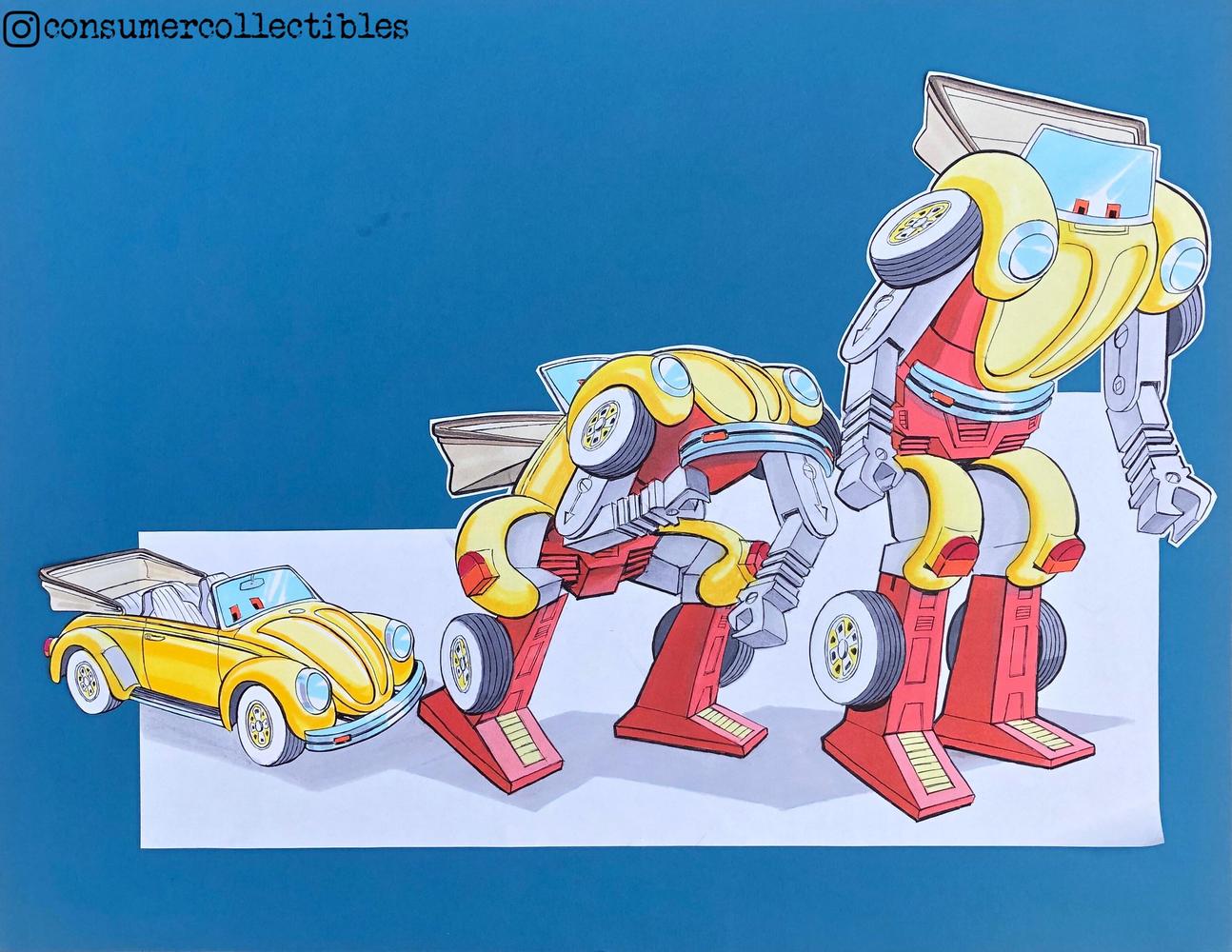 Muffy's transformation sequence
 -
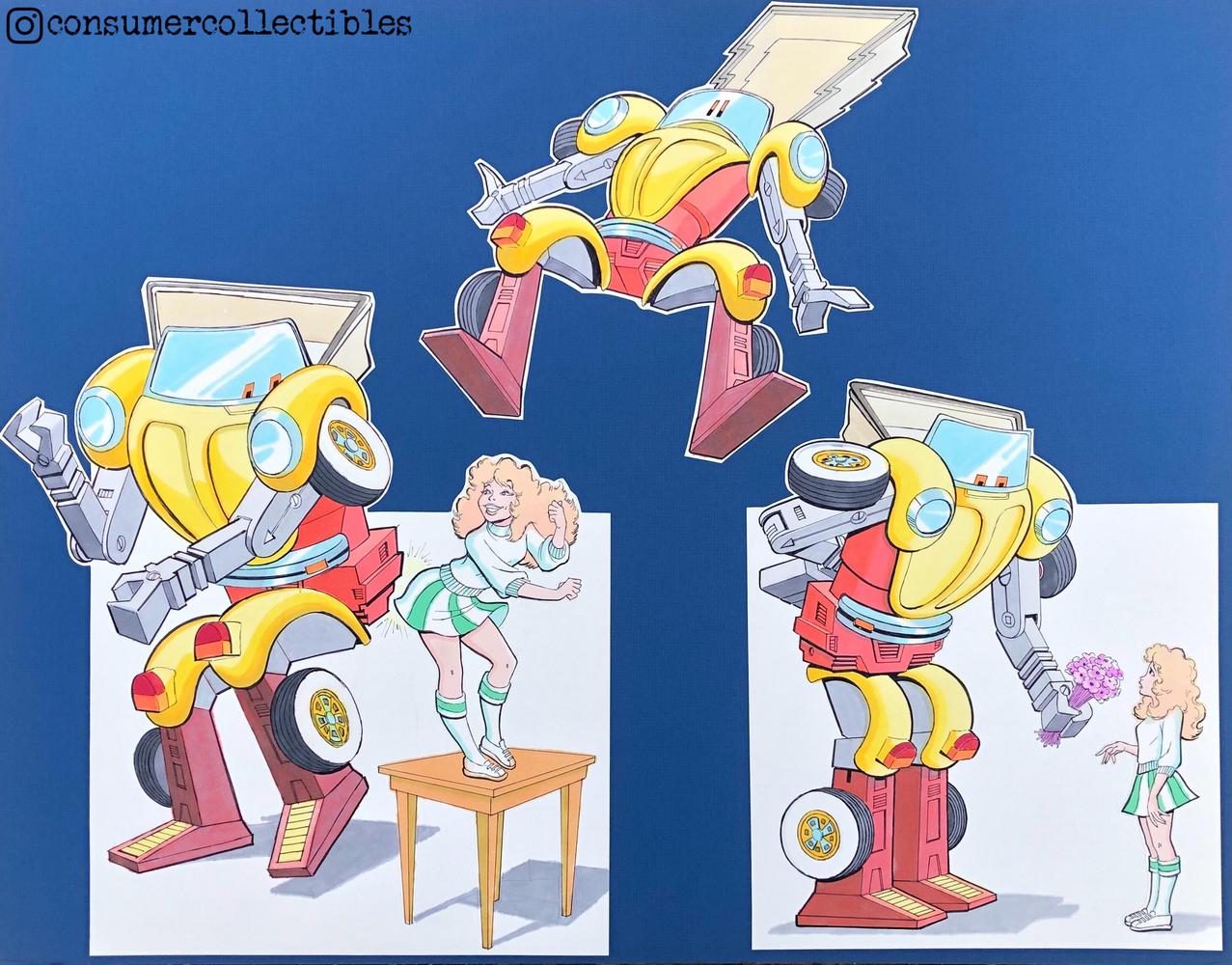 "Personality drawings" of Muffy
 -
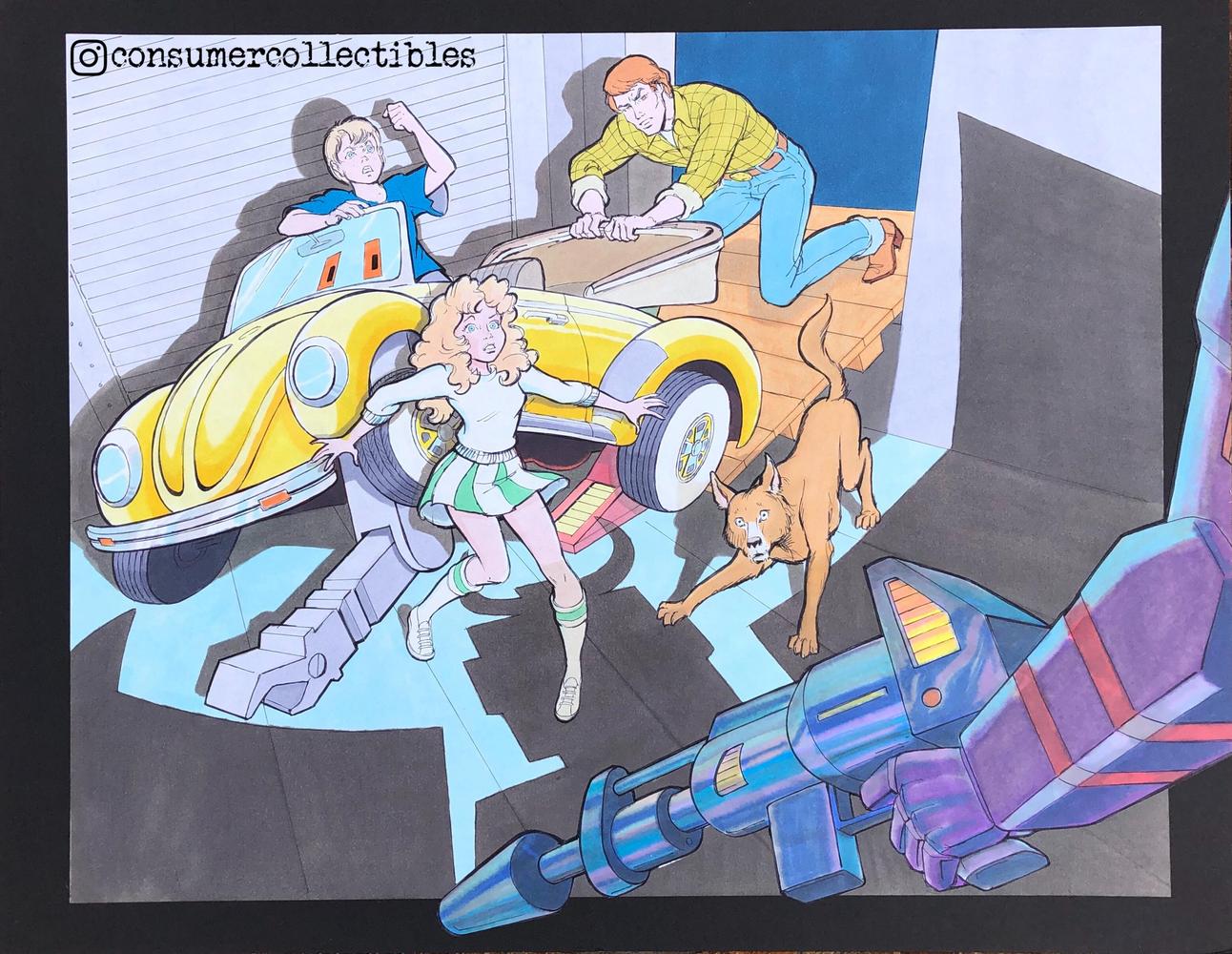 Muffy and co. are menaced by a robot with Prowl's silhouette


References
- ↑ Scans of Comics Feature at the "Starlogged" blog
- ↑ "The Secret Origin of the Transformers - Part 1"
- ↑ Jeffrey Scott's official website (archived)
- ↑ The Transformers production bible, including internal correspondance from Bryce Malek and Dick Robbins, that refers to Eddie and Matt by name
- ↑ consumercollectables on Instagram
- ↑ AllSpark.com forum post collecting Car and Cable art (archived)


