G.I. Joe and the Transformers (comic)
| This article is about the 1986 crossover by Marvel Comics. For the toy line homaging the comic, see G.I. Joe and the Transformers (toyline). |

G.I. Joe and the Transformers is a four-issue limited series produced by Marvel Comics from 1986. Set in the contemporary Generation 1 continuity, it follows the Transformers, G.I. Joe, and Cobra as they struggle for control of Power Station Alpha.
| G.I. Joe and the Transformers issues: | |||
|---|---|---|---|
Overview
[edit]The story is centered around Power Station Alpha, a mobile nuclear power plant that can beam energy across the globe. The Decepticons and Cobra both want it, and briefly ally themselves to steal it from the United States of America... until Cobra's agents discover that Shockwave has plans for the station that will bring about the destruction of the Earth itself.
The crossover takes place concurrently with the issues of the regular monthly Transformers comic alongside which it was published, weaving in, out of, and around their stories; it begins around the same time as the events of issue #24, and wraps up shortly after the events of issue #26. The regular series doesn't make much reference to it, except for a mention of the Decepticons' alliance with Cobra in issue #25, and of course, Bumblebee's transformation into Goldbug. Though the crossover made a nominal attempt to keep continuity with the concurrent issues of the G.I. Joe comic, the Joe series totally ignored its events, even omitting them from the recaps of Joe history featured in the 1986 and 1987 G.I. Joe Yearbooks. A couple of months after the limited series concluded, regular Joe writer Larry Hama made clear his position on the canonicity of the crossover in G.I. Joe Special Missions #5, when he established that the Transformers only existed as a toyline within the G.I. Joe universe. Of course, that wouldn't last, as years later, in 1993, the Transformers would appear in the Joe comic itself in a five-part storyline that ran from issue #138-142, which depicted the Joes and Cobras as already familiar with the Transformers from their first meeting in the original crossover.
The series was published at a time of considerable upheaval within the main Transformers and G.I. Joe books, which the crossover attempts to reflect, resulting in a rather disjointed story. During the course of the crossover, both Optimus Prime and Megatron are killed off in the main title, and Serpentor replaces Cobra Commander after he (and Destro) are believed dead.
Creative Team
[edit]The series was written by Michael Higgins. Art is by Herb Trimpe and Vince Colletta. Regular Transformers colorist Nel Yomtov also worked on the series.
UK belated printing
[edit]The mini-series is the only story from the Marvel US G1 cycle that was not immediately printed by the UK comic. Why this was is unclear, although as Marvel UK had only just acquired the licence to print Action Force (the UK counterpart to G.I. Joe) and their reprints were some way behind the events in this story, it's possible the crossover was considered to be too confusing.
The changes made by the series were substituted or ignored. An alternative origin for Goldbug would appear in "Wanted: Galvatron — Dead or Alive!" and "Hunters". Dirge would appear alive in the later UK story "Salvage!"
Marvel UK would later run their own Transformers/Action Force crossover in "Ancient Relics!" in Transformers #125 and Action Force #24–27.
In 1990 problems with publication deadlines resulted in the latest US comic stories not yet being available for the UK comic. This problem had occurred twice already in the last year and the previous solution of printing reprints of past UK stories had resulted in many letters of protest. So instead the decision was taken to run the G.I. Joe and the Transformers series, although modifying the series title to Transformers and G.I. Joe the Action Force, in order to create a much larger gap between the US and UK printings. The series appeared in issues #265–281.
No attempt was made to incorporate the series into the UK continuity. Instead the story was presented from the outset as a US tale that included their origin of Goldbug.
Collections
[edit]- G.I. Joe and the Transformers TPB (February 1993) (ISBN 0-87135-973-1)
- Collects issues 1–4.
- The collection contains no issue covers, bonus material, or advertisements. The title page for issue #2 was omitted.
- G.I. Joe/Transformers, Volume 1 TPB (August 29, 2012) (ISBN 978-1613773529)
- Packaged along with the later Generation 2 story (issues #138–142) from G.I. Joe: A Real American Hero. The title given above is the indicia title; the cover title is G.I. Joe The Transformers 1.
- The Transformers Classics, Vol. 8 TPB (April 22, 2015) (ISBN 1631401335 / ISBN 978-1631401336)
- Collects the full series, along with The Transformers Universe #1–4 and all the extra character biographies from The Transformers issues #47–49, 56–72, and 74–79.
- Transformers: The Definitive G1 Collection: Volume 89: Realignments (March 4, 2020)
- Also packaged along with the later Generation 2 story from G.I. Joe: A Real American Hero, but contains the full issue #138, as opposed to a short summary in the above 2012 volume.
- Bonus material includes a cover gallery and an intro from Simon Furman.
-
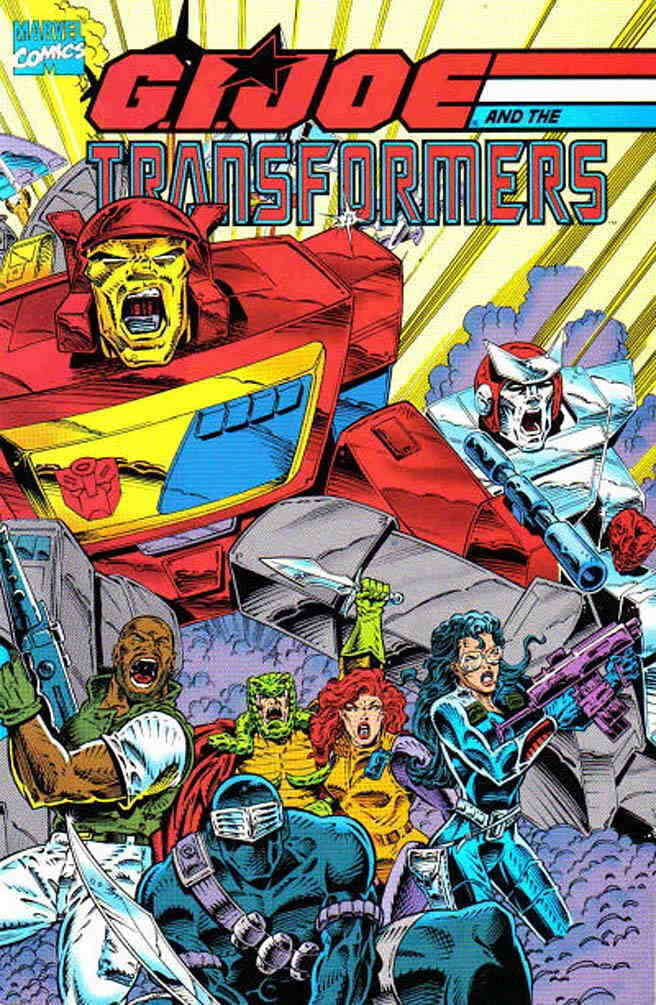 G.I. Joe and the Transformers TPB; art by Andrew Wildman and Stephen Baskerville
 -
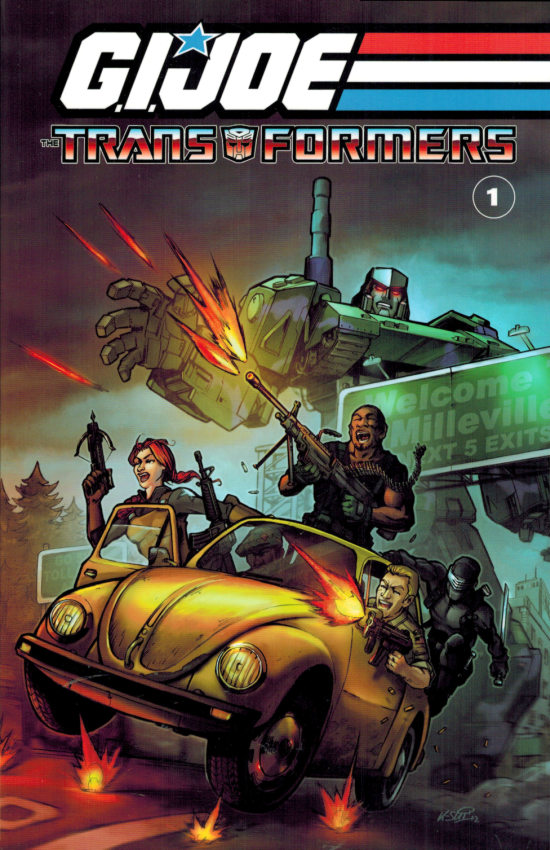 G.I. Joe/Transformers, Volume 1; art by Klaus Scherwinski
 -
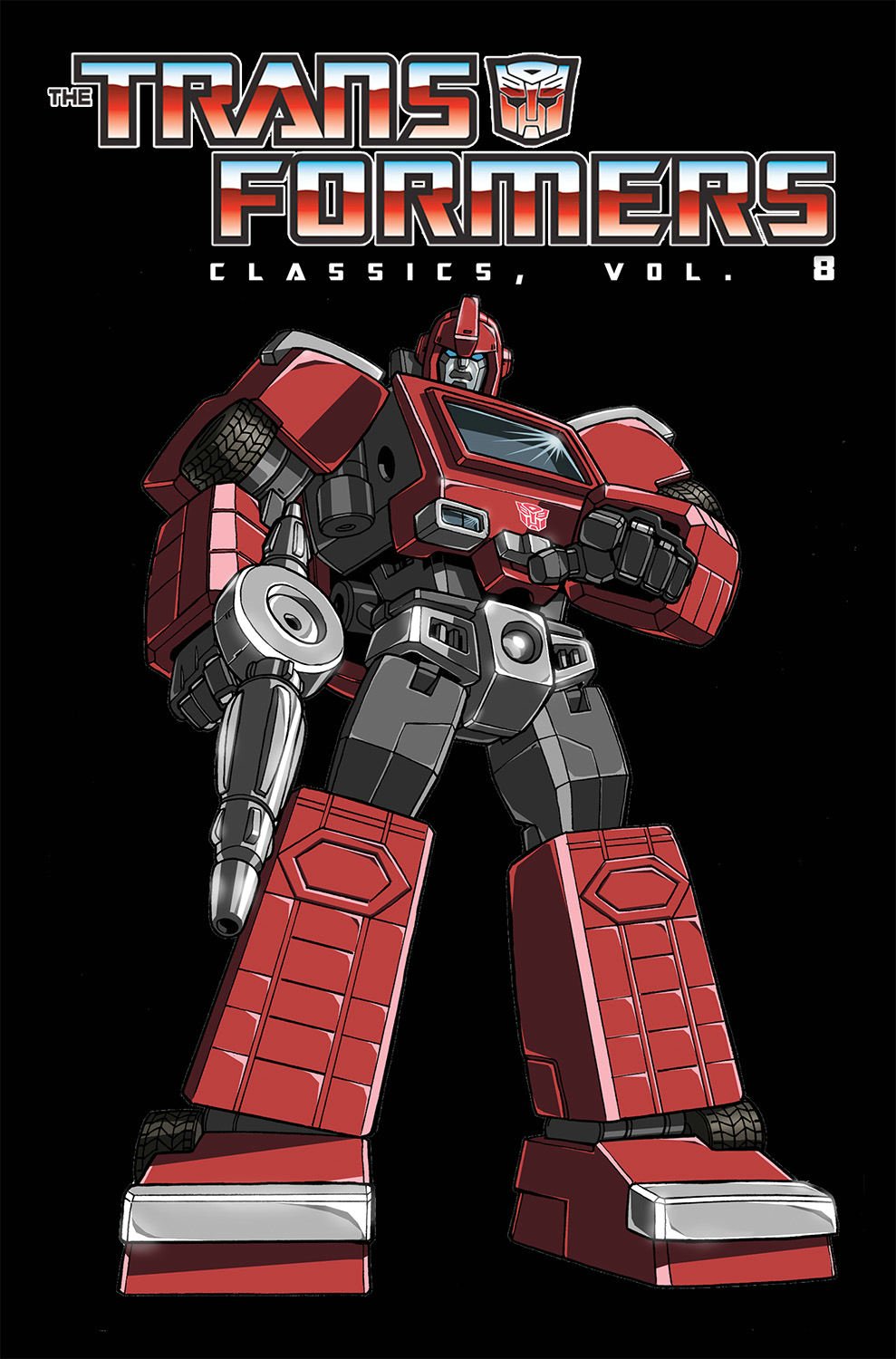 The Transformers Classics, Vol. 8 TPB; art by Guido Guidi
 -
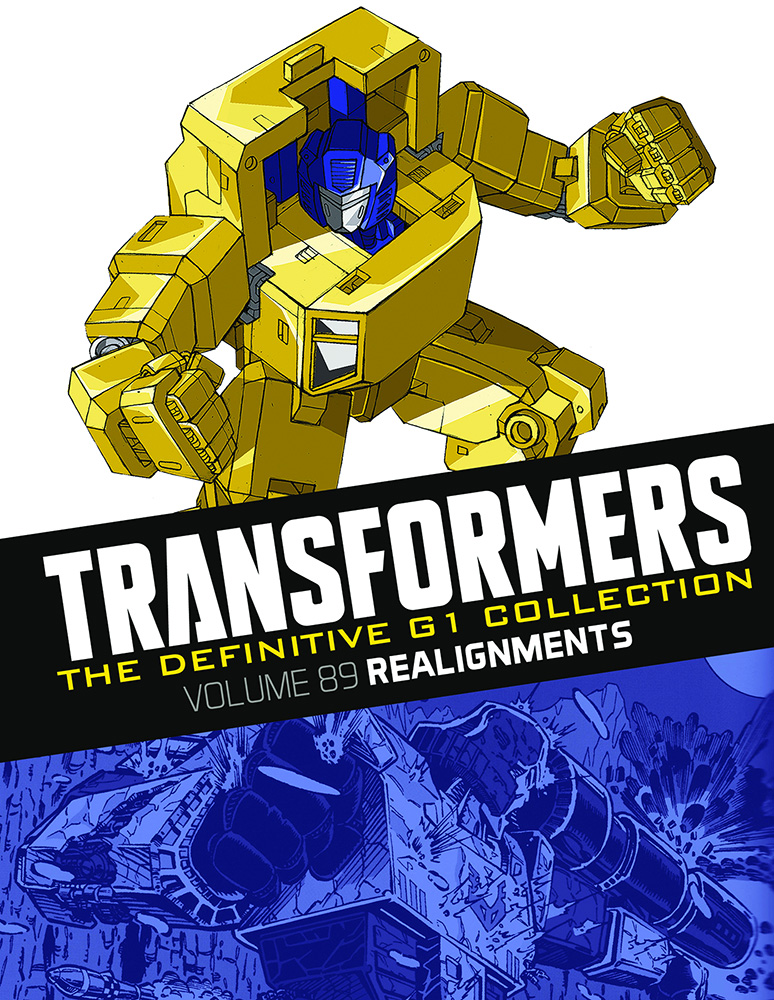 The Definitive G1 Collection Vol. 89: Realignments; art by Dreamwave (Goldbug), Chris Batista, Baskerville, Williams, and Hudson


Toys
[edit]25 years after the publication of G.I. Joe and the Transformers, Hasbro commemorated the series—and answered the wishes of many fans—by releasing a small series of toys that finally blended the two brands together. Available only at San Diego Comic-Con and Hasbro Toy Shop, the inaugural release in the G.I. Joe and the Transformers line featured a Sky Striker redecoed as Starscream, a new Cobra Commander, and a to-scale pistol mode Megatron accessory for the latter to wield. The toyline recurred for SDCC three more times over the years, following the general blueprint of redecoed G.I. Joe vehicles as Transformers characters, retooled Joes and Cobras, and mini accessories for some of the more Micro Change-ier Cybertronians (with some notable exceptions).
A unique selling point for the G.I. Joe and the Transformers sets was that their boxes were designed to resemble additional issues of the comic series, starting with issue #5, replicating the comics' logo, the corner boxes, and even including a stylised "H" (for Hasbro) logo where the original issues had featured an "M" (for Marvel). The rear faces of each box also featured backdrops of newly commissioned comic book-styled artwork complete with caption boxes and speech balloons, hinting at "lost episodes" of the series—although their readability was marred by being obscured by stock photos of the toys inside.
-
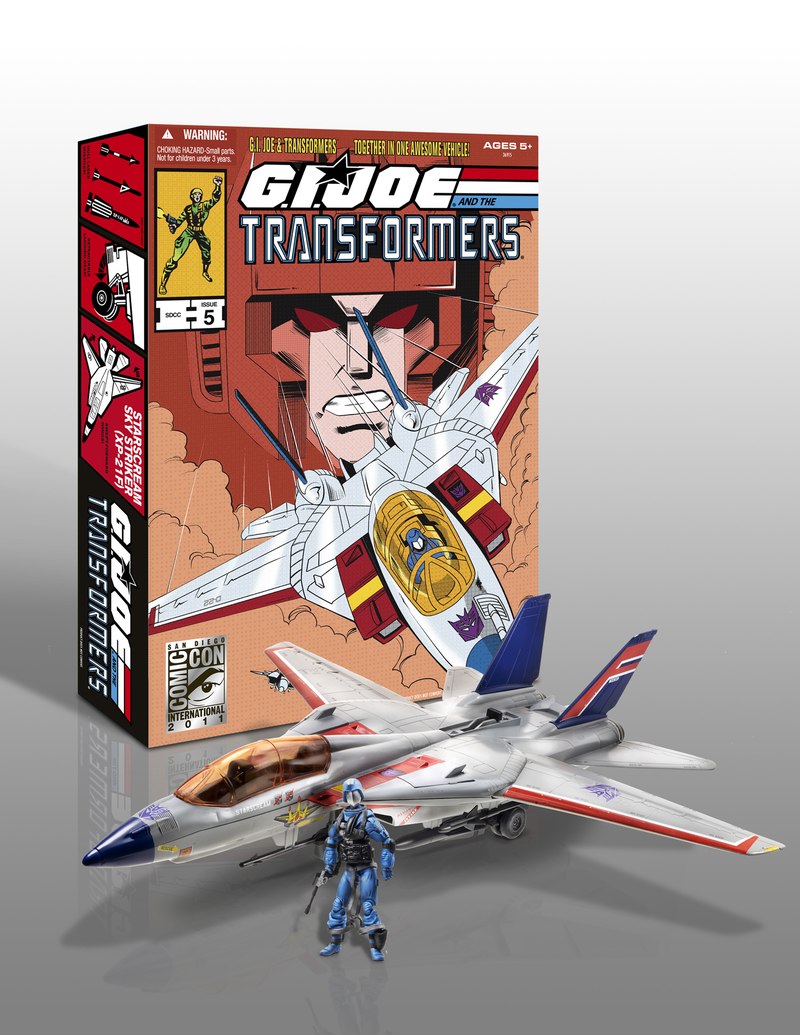 Issue 5 (2011)
 -
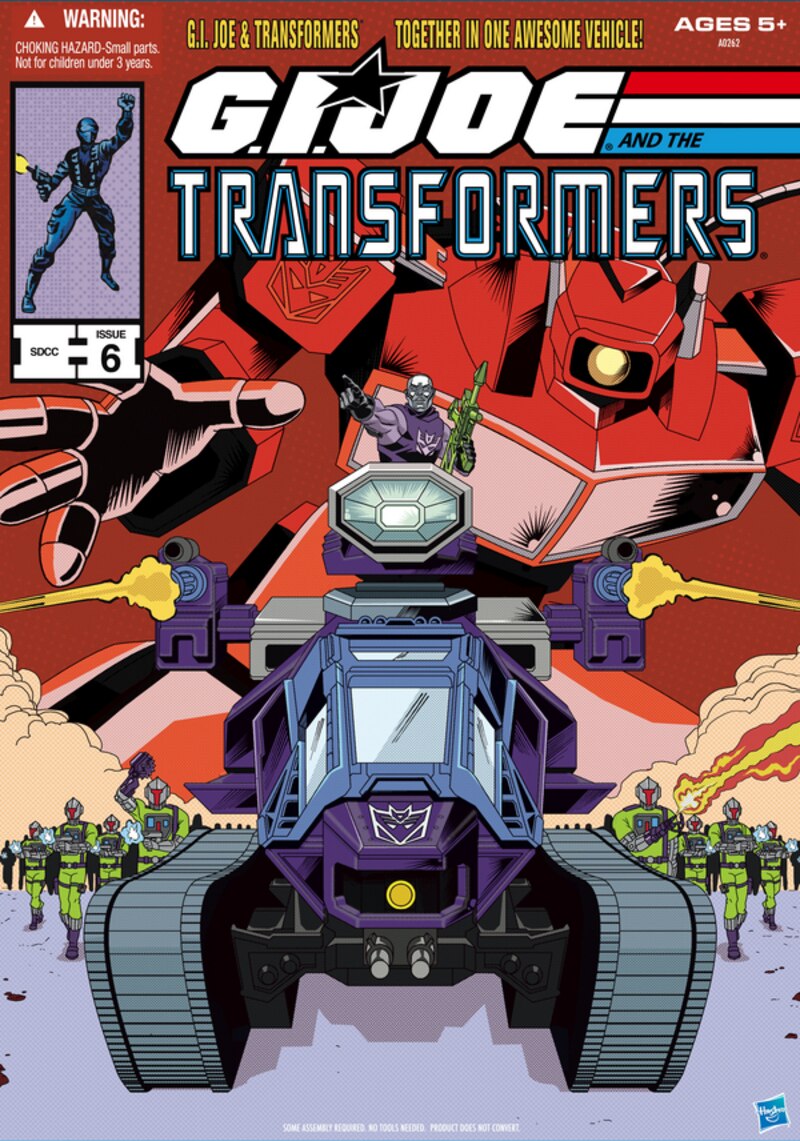 Issue 6 (2012)
 -
 Issue 7: The Epic Conclusion! (2013)
 -
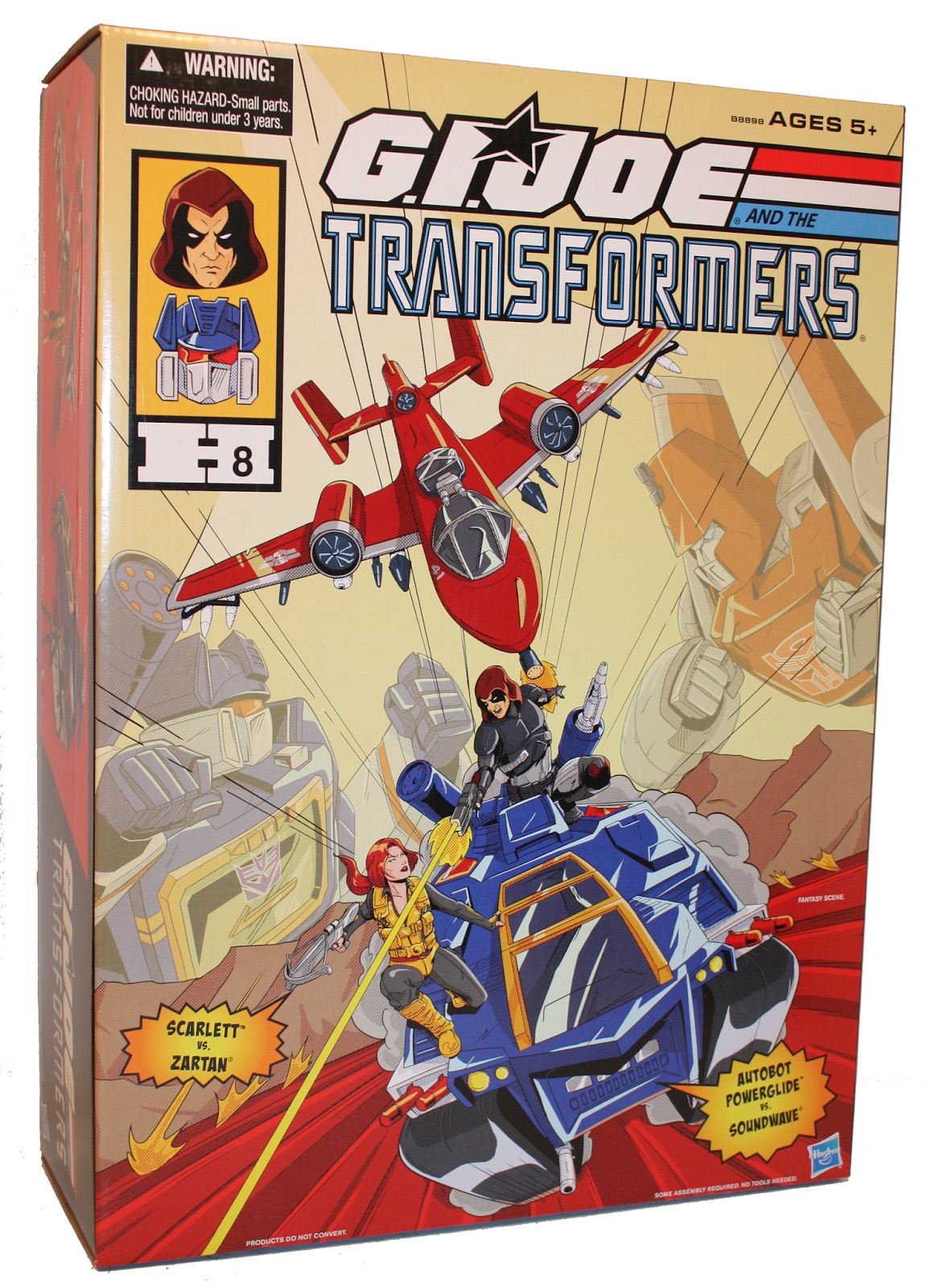 Issue 8 (2016)


Fictionally, the scene from "Issue 5" takes place in space; Cobra Commander, in Starscream's cockpit, gives the order to attack, and they head down to begin their conquest of Earth... unaware of their extra passenger, Megatron in gun mode, who has his own evil plans. In "Issue 6", Shockwave and Destro fulfil their deal with each other, with Shockwave apparently ponying up real cash for Destro's supply of Energon. Shockwave then scans the blueprints for a new HISS tank, adopting it as his vehicle mode. He pledges that he and Destro will rule the world once they rebuild Power Station Alpha, but their plans are being covertly recorded by Soundwave in alt mode.
"Issue 7", referred to on the package as "The Epic Conclusion!" and "the stunning final episode", shows the ninja Snake-Eyes in battle with the Metallikato master Bludgeon. Jetfire rocket boosts across the sky in order to stop... some kind of plan that is obscured by a stock photo of Hound's toy. Elsewhere, the Baroness and Ravage make to flee with stolen activation codes, but they and Bludgeon are cornered by Hound and Blaster. "The end...?" wonders the final narration box.
Turns out it wasn't the end, as "Issue 8" came about, albeit three years later. The story content on this box is minimal, only featuring Scarlett abseiling from her Rattler, a HISS tank launching a missile, and then her and Powerglide facing down Zartan and Soundwave.
Fun Publications would also release some toys with the G.I. Joe and the Transformers branding exclusive to both their G.I. Joe and Transformers Collectors' Clubs, though those would play in other spaces than the Marvel crossover miniseries. See the main toyline page for more information.


