Super Dimension Fortress Macross

Super Dimension Fortress Macross (超時空要塞マクロス Chōjikū Yōsai Makurosu)[1] is a 1982 multimedia project consisting of a 36-episode animated television series accompanied by toys and songs. Macross was created by Shōji Kawamori in conjunction with Artland, Studio Nue, and Tatsunoko Production with sponsorship from Big West. The Macross brand has continued with new entries every so often, significantly with Macross 7 in 1994, Macross Frontier in 2008, and Macross Delta in 2016.
Relevant to this wiki, Macross is the source of the original, much-beloved Jetfire toy design, notable for its "perfect transformation" (完全変形 kanzen henkei) in having a revolutionary level of animation accuracy for a triple-mode mecha toy all the way back in 1982.
Story
[edit]
.
In the year 1999, a massive derelict spaceship crash-lands on Earth in the south Pacific Ocean, confirming to humankind that they are not alone in the universe. Over the next decade, a United Nations Government is formed to oversee the transition into a new space age, reverse-engineering the technology found aboard the alien capital ship to create the U.N. Spacy, humankind's first spaceworthy military service. Their primary air and space vehicle is the VF-1 Valkyrie, a next-generation variable fighter, with the alien capital ship itself being repaired and remodeled to become the SDF-1 Macross, capable of faster-than-light travel.
Finally, in 2009, the giant Zentradi arrive to acquire the lost warship and to investigate if this strange world may be home to their long-lost creators, the Protoculture. At this point, an accident strands the human crew of the SDF-1 at the edge of the solar system and ignites war with the Zentradi, and humanity and the galaxy will never be the same again.
Macross in Transformers
[edit]
Initially in 1982, a company called Takatoku Toys manufactured Macross toys, notably the "perfectly-transforming" 1/55 VF-1S Super Valkyrie. However, Takatoku would collapse not long thereafter, and their assets would soon be bought out by Bandai, who then licensed the large Macross VF-1S (as well as Beetras and Dorvack assets) to Hasbro, who desperately needed molds to fill out the 1985 product line of The Transformers, which had absolutely taken off beyond their initial expectations.
Why would Hasbro market product from Japanese companies besides its collaborator Takara? Bob Prupis, one of the original members of the Transformers marketing team, would frequently go to Toy Fairs in Asia, where "any product that really looked good that was exciting we didn't care where it came from. We did some work with Bandai, who had been working with other people, and took a few products that looked right for our line".[2] The 1/55 Super Valkyrie, then, must have met their criteria for inclusion. As Bandai at the time was only concerned about business in Japan, Hasbro was free to sell the large VF-1 mold as a Transformers figure in non-Japan markets. However, as Hasbro wanted advertising for such a large toy (US$32 plus tax on store shelves back in 1985), some compromises had to be made for Jetfire to appear in The Transformers animated series, which Takara would want to air in Japan as well. The exact sequence of details is uncertain, but we wound up with a character named "Skyfire" in the episode "Fire in the Sky" shortly ahead of the "Jetfire" toy itself on North American and European store shelves. Notably, Hasbro's European offices billed Jetfire as the Autobot leader for their 1985 debut of the Transformers brand, creating a particularly lasting memory for European fans.
Jetfire's enduring popularity has seen many new incarnations of the character and trademark over the decades, even if more modern toys tend to derive much more from the legally-not-Macross-we-promise cartoon design with design nods to the toy. Now and then, Jetfire's original Macross-based design gets to make small appearances.
In 2024, it was announced that a Transformers × Macross 7 toy, Basara Prime, would be released as part of TakaraTomy's Synergenex series of crossover figures, in celebration of Transformers' 40th anniversary and Macross 7's 30th.
Legacy cameos
[edit]-
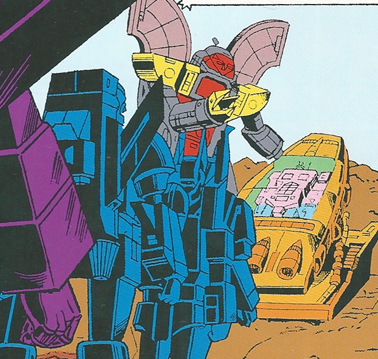 1986 comic artist error of Jetfire's toy design
 -
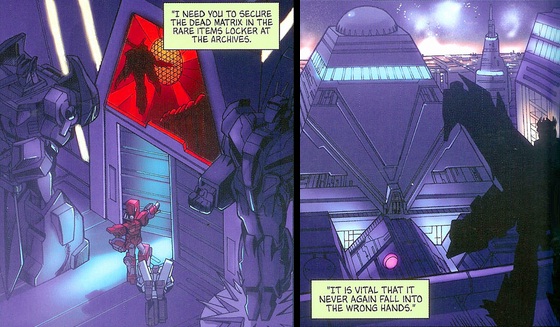 2006 Cybertron magazine comic cameo
 -
 2013 Kre-O online comic cameo
 -
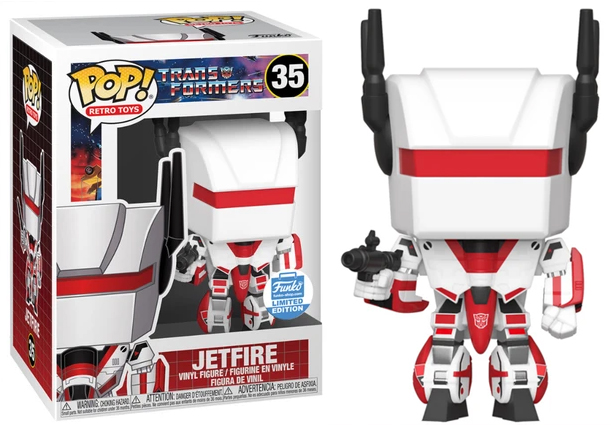 2021 Funko Pop vinyl figure
 -
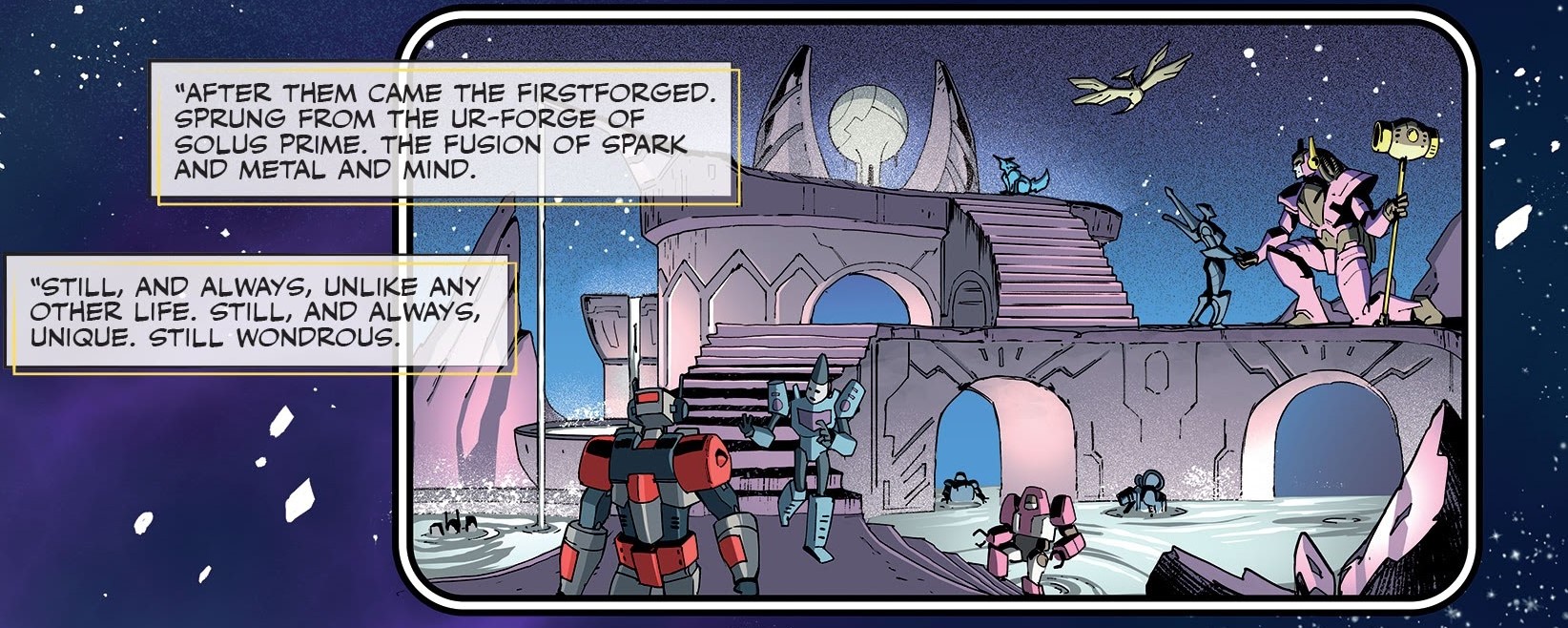 2022 IDW comic cameo


Attempted interference by a terrible company
[edit]
In the 1980s, a U.S. company called Harmony Gold ventured into the anime adaptation industry. They purchased the overseas rights to the 1982 Macross TV series as well as two unrelated series to create a hodgepodge project called Robotech. (Back in the day, Power Rangers-style story modifications were much more common in the U.S. industry.) However, they were unable to market the original 1/55 VF-1S toy because that mold's overseas rights had already been licensed by Hasbro.
Among the anime community, Harmony Gold is infamous for its stranglehold on the distribution (or rather, the lack thereof) of Macross material outside of Japan throughout the 2000s and 2010s. During this time, the company filed multiple frivolous lawsuits against other companies it perceived to have infringed upon its intellectual property, even though Japanese courts have ruled that Harmony Gold doesn't actually own the authorship rights to the Macross franchise.[3] In 2013, Harmony Gold sued Hasbro over a non-transforming G.I. Joe and the Transformers Jetfire toy. Although the suit admits that "damages are difficult to ascertain", the company brazenly demanded that Hasbro would have to recall and destroy all the Jetfire toys, turn over all profits relating to the sales to Harmony Gold, and pay all related damages.[4] Unsurprisingly, given its hilariously frivolous nature, the suit was subsequently dismissed with prejudice in favor of Hasbro.[5]
To make all of this even more pathetic? In 2023 Harmony Gold would release a redeco of their newer version of the VF-1S mold under the title God of Flame featuring the—remember, Hasbro-created—color scheme for the original Jetfire toy, plus another version with the red exchanged for purple to boot. It cost a whopping 230 USD—for a Voyager-sized toy smaller than his original Generation 1 version!—and it was plagued with QC issues.
Between these dubious legal antics and a number of unrelated accusations regarding fraud and embezzlement,[6] it should probably go without saying that mecha fans worldwide generally aren't fond of Harmony Gold. Notably, fans aren't the only people who feel this way: Shoji Kawamori himself dislikes Robotech, calling it a "pirated version" of the series and saying that fans should "support the official Macross releases" instead.[7] Enough said about that.
Notes
[edit]- In the 1980s, the VF-1 molds underwent various licensed uses by overseas companies, similar to the distribution of Takatoku-based assets for Beetras and Dorvack. In the United States, Canada, and Australia, a company called Select released a small VF-1S mold as part of the "Maladroids" subline in Convertors. The baseline Roy Focker deco was renamed Zark, also being given a variant red redeco unique to Converters, while a black deco (including the Super Pack) unique to Converters was named Zardak. In 2010, the Transformers Collectors' Club prose story "A Team Effort" would include Zardak in a cameo as a Transformers character.
References
[edit]- ↑ Official translations vary on whether there should be a "The" at the beginning in the English title in front of "Super Dimension Fortress Macross".
- ↑ G1 Hasbro marketing executives panel
- ↑ Tatsunoko Wins "Author's Right" to Macross
- ↑ Harmony Gold-USA, Inc. v. Hasbro, Inc. decided 22 July 2013
- ↑ Harmony Gold USA v. Hasbro Case Dismissed
- ↑ Federal agents search producer's home, office
- ↑ fullfrontal.moe interview by Dimitri Seraki and Arnaud Bastie at Gallery AaMo in June 2019:
"In America, they have a modified version of Macross, which is called Robotech. Nowadays, there are a lot of people who are fans of Robotech without knowing that Macross exists. How do you feel about it?"
S. Kawamori: "I don't understand, nor do I accept the fact that they took and modified my work without even asking. I can not comprehend how a pirated version like this exists. However, I feel I was very fortunate that many other people from other countries around the world were able to see Macross."
"Harmony Gold has a lot of new project around Robotech in America. I think they are working on a new movie, for example, do you take any credits from the American Robotech works?"
S. Kawamori: "I don't want to talk about it. Please support the official Macross releases."
External links
[edit]- Official website (Japanese)
- Official Twitter page (Japanese)
- Official Twitter page
- Super Dimension Fortress Macross at Wikipedia
- Macross Mecha Manual fan database


