Animation error

Animation errors are phenomena in cartoons, which means some scenes are weird, inconsistent, or even illogical. Sometimes these represented multiples of otherwise unique characters, characters appearing in inappropriate scenes (even after their original deaths in some cases), inexplicable deviations from character models, and odd size variations. They were most rampant in the original Generation 1 cartoon, due to the low animation budget. However, the cartoon was not alone in this respect, considering the production values of most other cartoons in the 1980s.
Fiction
Ask Vector Prime
What outside observers identify as "animation errors" are actually the result of time and space anomalies occurring within the universe, but only for the briefest of moments. The many reality-bending exploits of the Transformers have resulted in numerous instances of these logical impossibilities. The anomalies are then "self-correcting", disappearing as soon as they happen, and thus maintaining the integrity of the universe. The erasure of these anomalies causes those who have observed/experienced them to forget them immediately, as they have been wiped from history, hence how nobody ever seems to "notice" them. Ask Vector Prime, Sep. 30, 2015
Known causes of these anomalies:
- Dinobot Island
- The destruction of Unicron
- The Unicron Singularity
- The Quintesson Time Window
- The Eurythmic Harmony (identified as particularly potent)
Types of animation errors
Animation errors are often separated into two types:
Animation and technical glitches
Miscoloring

Five Faces of Darkness, Part 4
Perhaps the most common error is when a character is colored incorrectly. Sometimes they are colored like other characters mistakenly; other times the coloring is totally off, like Optimus Prime painted white (and not as Ultra Magnus). Miscoloring should not be confused with palette swaps, which are for the most part intentional; nor discoloring, which refers to fading, yellowing or staining rather than colouring errors.
Sizing errors
It's not for no reason that people joke that scale doesn't exist in Transformers, and this type of error is part of why--most shows do still use scale charts, and this is when the animation ends up being grotesquely off from the size the characters are "supposed" to be. Sometimes for dramatic effect or a specific moment, and other times, it's just a flat-out mistake.
-
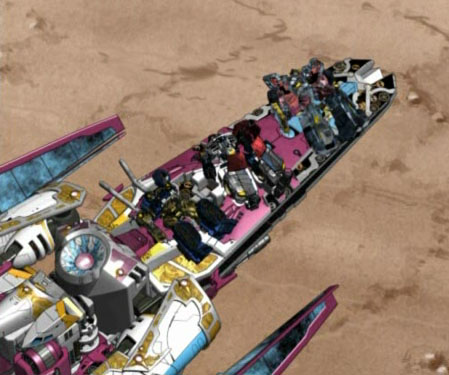 Ask Vector Prime: How *do* we all fit here?
Critical -
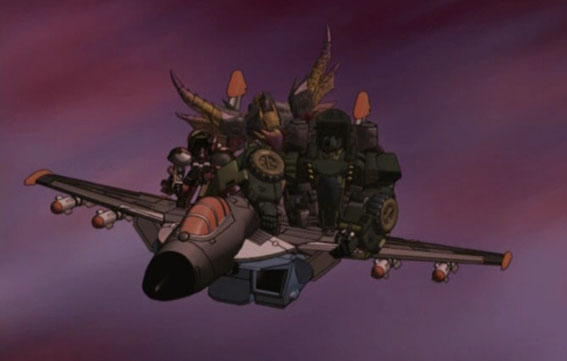 Attack of the 500-Metron Thundercracker
Starscream


Layer issues
These amusing cases involve the various animation cels for individual characters being stacked wrong, leading to characters who should be in the back in group shots appearing in the front. Since they were supposed to be in the background, of course, they were drawn as being smaller, hence when they inadvertently get moved up front, they're hilariously dinky. Layer issues should not be confused with size changing.
-
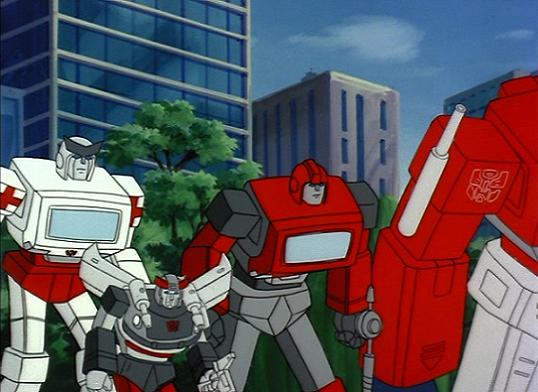 Looks like Bluestreak participated in bring-your-kid-to-work-day. Not to mention GIANT OPTIMUS PRIME.
City of Steel -
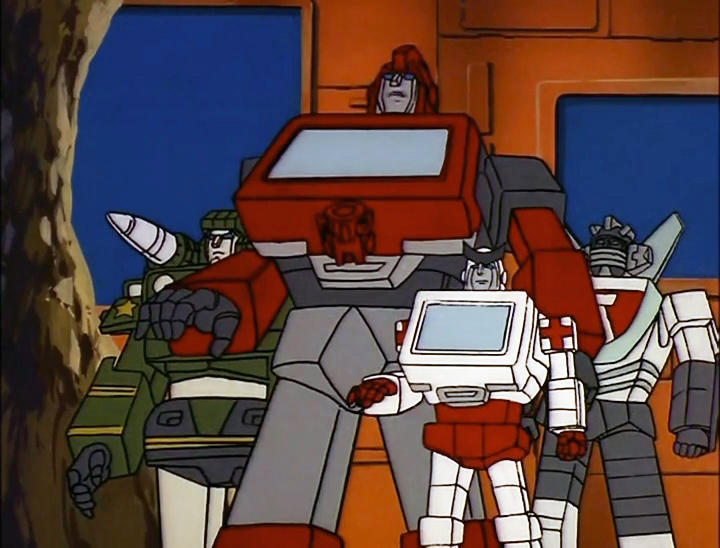 Aw, look. So did Ratchet. They're so cute.
Masquerade -
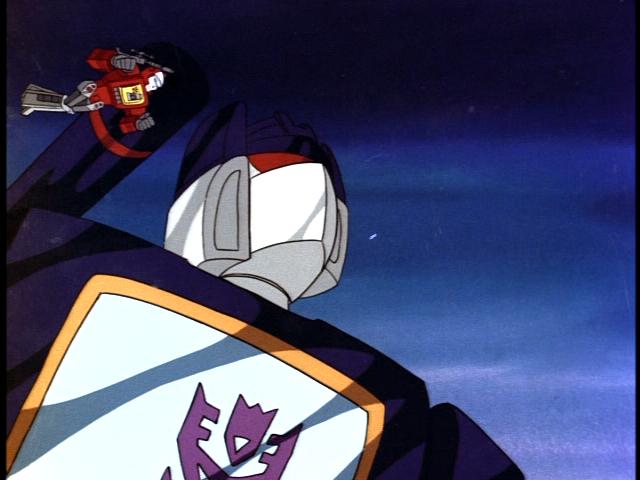 Okay, this is getting annoying.
Carnage in C-Minor


Clipping
Present in the various CGI series, this is when part of one model phases through another. This tends to happen fairly often if you look for it, given that the casts of many shows have fairly bulky designs with a lot of parts to get in the way.
-
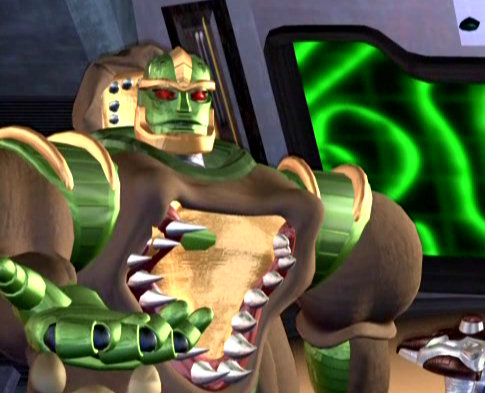 When Clippy Attacks!
Proving Grounds

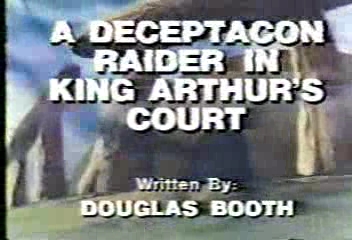
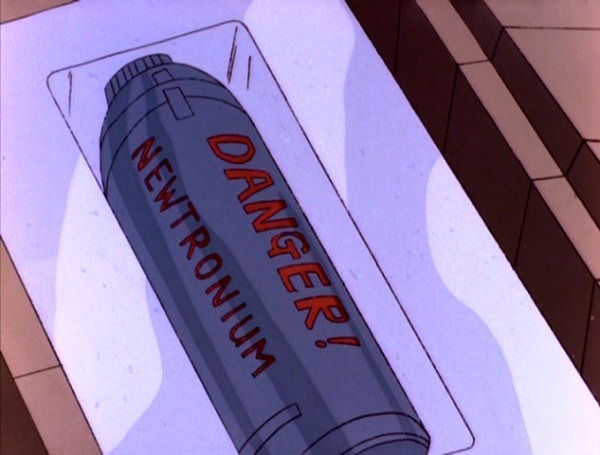
Speeling mistakes
No, reelly.
-
-
-
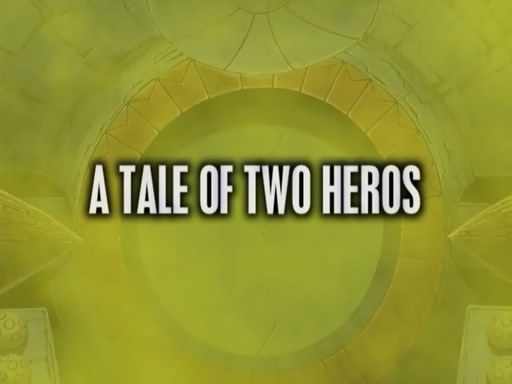 It was the best of tyme, it was the worst of tyme.
A Tale of Two Heros -
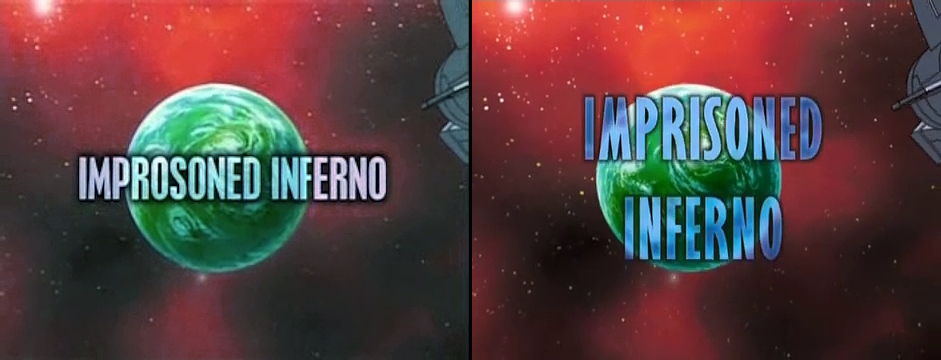 He spent the last few cycles building up an immunity to iocine powder.
Improsoned Inferno


Continuity error
Dead men standing
There have been several examples of characters appearing after they have supposedly died, most notably in The Transformers: The Movie. Brawn, Huffer, and Windcharger made appearances in the third season of the cartoon, while Prowl and Wheeljack showed up in the The Headmasters and Victory cartoons.
-
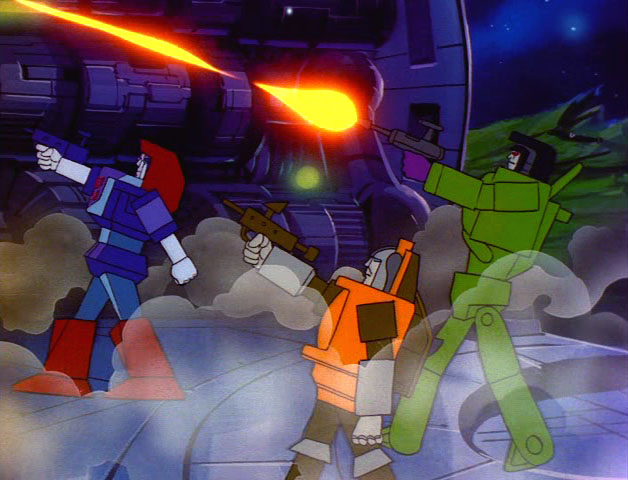 Brawn appears in the third season while he has died previously. Huffer was also stated to have died during the same events.
Carnage in C-Minor -
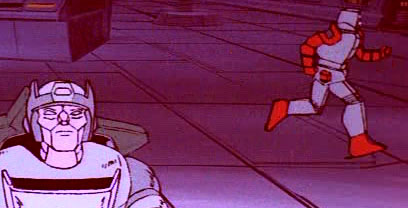


Wrong place at the wrong time
Sometimes, characters who have been captured or gone missing will suddenly show up in their base or team with no explanation.
-
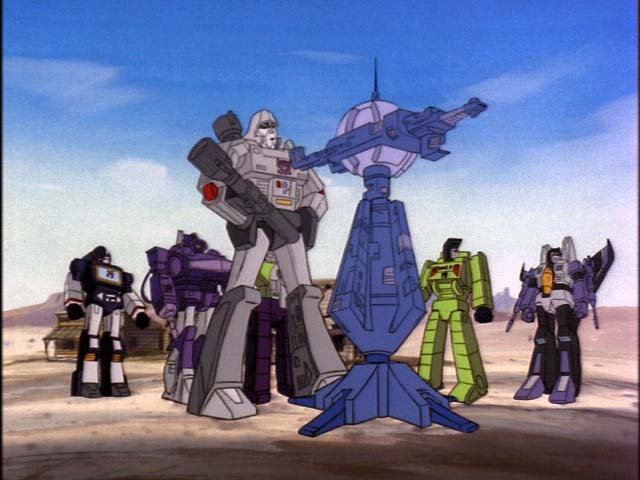 Shockwave came to Earth to search for his right hand.
The Autobot Run -
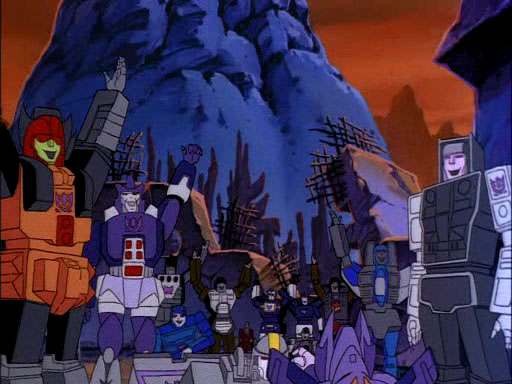 "Yay, we're going to save me, Galvatron!"
Five Faces of Darkness, Part 1


Notable examples

The Search for Alpha Trion
Animation errors in remastered versions
Some animation errors could happen after remastering, such as those in the episode "Fire on the Mountain". This is because Rhino Entertainment's remasters - initially created due to the degradation of the 1 inch NTSC broadcast tapes[1] - of the Generation 1 cartoon were based on preliminary film prints of the animation[2] (the final film masters having been lost or destroyed), from which some errors were fixed before the original transmission.
Notable episodes
- B.O.T.
- Carnage in C-Minor
- Child's Play
- Five Faces of Darkness (all five parts).
- The Search for Alpha Trion
References
- ↑ "I, personally, went to New York, where the original broadcast one-inch masters are housed... Before the question is asked, I'll answer it now. The one-inch masters have not physically held up well over the years. In some cases, they're nearly unwatchable." - Brian Ward, on his investigations for the Shout! Factory releases, http://www.shoutfactory.com/community/1551/thread.aspx
- ↑ "There are no current plans for Blu-ray, though, it's something I would love to own myself one day. The problem is this, no one has successfully found the original BROADCAST film elements (Rhino used PRE-broadcast film for their releases, hence all the problems), which means there's nothing to restore and make high-def quality." - Brian Ward, in response to a question about the Shout! Factory releases, http://www.shoutfactory.com/community/1551/thread.aspx#5734


